



Celebrity advocacy can be easy to dismiss as symbolic. A speech, a campaign, a photograph with a world leader — none of these, on their own, necessarily amounts to meaningful public service. There is another category of public figure: people who have spent years building subject-matter credibility, showing up repeatedly, working with established institutions and, importantly, putting their visibility behind issues that extend well beyond their careers.
Among the most recognisable are Emma Watson, Angelina Jolie, Malala Yousafzai, Leonardo DiCaprio, David Beckham and Cate Blanchett. Their portfolios differ considerably, but their work offers an interesting benchmark for what sustained advocacy can look like.
1. Emma Watson — Gender Equality Beyond the Soundbite
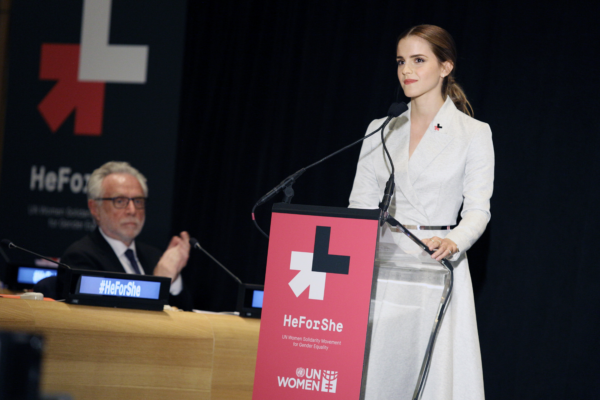
Emma Watson became one of the most recognisable faces of the global gender-equality movement through UN Women’s HeForShe campaign, after being appointed a UN Women Goodwill Ambassador in 2014.
Her contribution has centred on making gender equality a conversation involving men as well as women. HeForShe was designed as a global solidarity movement, encouraging men and boys to participate in dismantling barriers to equality.
While Watson has maintained a lower public profile in recent years, the institutional work she helped popularise continues to sit within UN Women’s broader gender-equality agenda. In 2025, UN Women marked 15 years of work across 109 countries, while the organisation’s Beijing+30 campaign placed renewed emphasis on women’s rights, leadership and equality.
Watson’s significance therefore lies not simply in the number of speeches she has delivered, but in how effectively she helped translate an international policy issue into a mainstream cultural conversation.
2. Angelina Jolie — Two Decades With Refugees
Angelina Jolie represents a different model: long-term humanitarian engagement that eventually extended well beyond the conventional celebrity ambassador role.
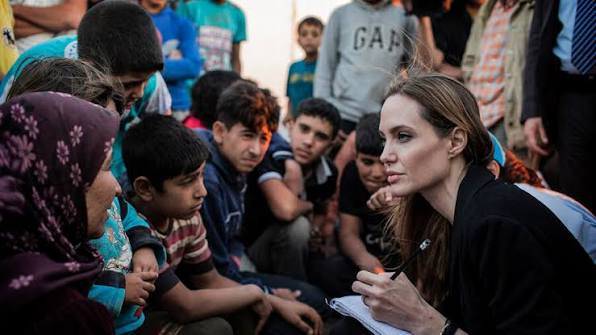
She worked with UNHCR for more than two decades, first as a Goodwill Ambassador from 2001 to 2012 and then as Special Envoy from 2012 to 2022. During that period, she undertook more than 60 field missions and repeatedly brought attention to refugee protection and forced displacement.
Jolie left her formal UNHCR position in December 2022, explaining that she wanted to work more directly with refugees and local organisations and to broaden her humanitarian portfolio. UNHCR says she continues to engage with the organisation and that refugees and forced displacement remain part of her work.
That distinction matters. Jolie is not currently a UNHCR ambassador — but her two decades of field-based humanitarian work remain among the more substantial examples of celebrity involvement in the UN system.
3. Malala Yousafzai — Advocacy Built Around Education
Malala Yousafzai’s advocacy is perhaps the clearest example of personal experience becoming a sustained global policy campaign.
A UN Messenger of Peace and Nobel Peace Prize laureate, she continues to campaign for girls’ right to education through the Malala Fund. The organisation focuses on policy advocacy and grantmaking, with current work spanning Afghanistan, Brazil, Ethiopia, Nigeria, Pakistan and Tanzania.
In May 2026, Yousafzai addressed the Education World Forum, speaking directly to education ministers and policymakers about the consequences of funding decisions on schools, teachers and children. The distinction is important: her advocacy is not simply about raising awareness. The Malala Fund explicitly works to influence policy and increase investment in girls’ secondary education.
4. Leonardo DiCaprio — From Hollywood Star to Climate Advocate
Leonardo DiCaprio has built his public-service identity around climate and environmental protection.
The United Nations recognises him as a Messenger of Peace with a special focus on climate change. His environmental work stretches back decades, including the foundation he established in 1998 to support biodiversity conservation and climate solutions.
His advocacy sits within a wider network of conservation organisations and campaigns focused on biodiversity, forests, oceans and climate.
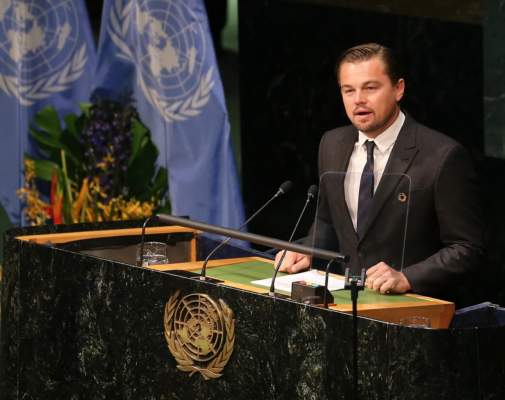
The significance of his role is particularly evident against the continuing urgency of the climate agenda. In 2025, the UN’s climate programme continued to push governments towards stronger emissions targets, renewable energy investment and climate action ahead of COP30.
DiCaprio’s role is therefore less about representing a single humanitarian programme and more about maintaining climate change as part of mainstream public discourse.
5. David Beckham — Children, Education and Opportunity
David Beckham has been a UNICEF Goodwill Ambassador since 2005, giving him one of the longest-running relationships with a major UN agency among contemporary global celebrities.
His work has focused on children affected by poverty, violence, conflict, disease and barriers to education. Through the 7 Fund for UNICEF, launched in 2015, his advocacy has particularly highlighted issues affecting girls and young people.
In 2025, Beckham’s relationship with UNICEF entered its twentieth year. UNICEF highlighted a new partnership between the Inter Miami CF Foundation and UNICEF supporting access to quality education programmes for children in five Latin American and Caribbean countries. Beckham was also recognised at the World Economic Forum in Davos with a Crystal Award for his humanitarian work.
Later that year, he travelled to India with UNICEF, meeting children and young people and advocating for equality, inclusion and opportunity. The longevity is notable: the advocacy has continued long after Beckham’s playing career became the centre of his public identity.
6. Cate Blanchett — Giving Refugees a Global Audience
Cate Blanchett may offer one of the strongest contemporary examples of sustained celebrity humanitarian advocacy. She has served as a UNHCR Global Goodwill Ambassador since 2016. In May 2026, UNHCR marked her tenth year in the role, highlighting her field visits and continuing advocacy for people displaced by conflict, persecution and climate-related disasters.
Her recent work has included advocacy around Sudanese refugees in Egypt, where her October 2025 visit to the El Gouna Film Festival helped draw international attention to the displacement crisis. UNHCR reported that the festival raised US$980,000 for its work.
She has also helped develop the Displacement Film Fund, supporting displaced filmmakers and filmmakers documenting displacement. The initiative was developed through the Global Refugee Forum and launched with the International Film Festival Rotterdam’s Hubert Bals Fund.
In December 2025, Blanchett delivered a keynote at the Global Refugee Forum and opening remarks at the Nansen Refugee Awards, continuing to use the film industry’s global reach to keep refugee issues visible.
The Bigger Lesson: Influence Is Not the Same as Humanitarian Impact
What connects these six figures is not simply fame. It is continuity.
Watson helped make gender equality a mainstream cultural conversation. Jolie spent more than 20 years engaging directly with refugee issues. Malala turned education advocacy into an international policy and grantmaking organisation. DiCaprio has maintained a decades-long environmental portfolio. Beckham has remained involved with UNICEF for more than 20 years. Blanchett has spent a decade combining field engagement, fundraising and advocacy for displaced people.
Their approaches are different, and not every contribution carries the same institutional weight. Nor should celebrity involvement be confused with the work of governments, humanitarian professionals, educators or activists on the ground. But there is a useful standard here.
A title can open a door. A famous face can attract attention. But credibility is built by what happens after the photograph, after the speech and after the headline.
In an era increasingly saturated with personal branding and performative social responsibility, these six provide a useful reminder that public influence becomes meaningful when it is backed by consistency, institutional engagement and a willingness to keep showing up.