



Within a short period, the pageant world was stunned by two starkly different viral moments: a contestant whose veneers fell out on stage, and another stripped of her title due to an explicit video leak. The Miss Grand Thailand 2026 pageant’s viral moment, had at once made it become a newsworthy battleground, in relation to redefining modern beauty, shifting away from superficial perfection towards elegance, class, raw authenticity, or, in some cases, further away from the chaotic reality.
These events highlight the intense pressure on Asian women to conform to impossibly high, expensive, and often superficial beauty standards, while testing the limits of what a “beauty queen” should be. As much as Miss Grand is seen as the newer, entertainment driven, high energy show, it is worth while to note Miss Universe, continues to reign as the pinnacle of beauty pageants, for its longstanding legacy, of which it is considered the most internationally recognised, and most competitive to win.
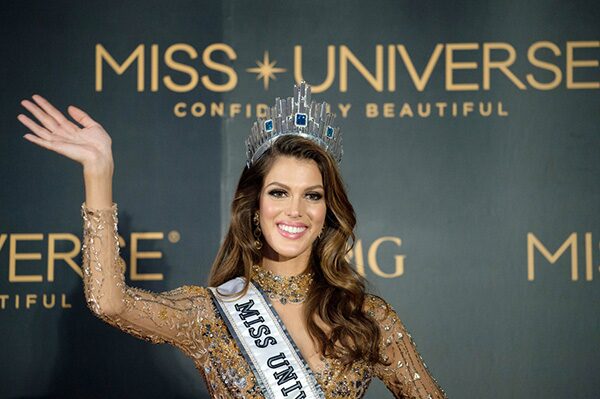
In the South-East Asian region, Filipino, Pia Wurtzbach, had held the honour of winning the most prestigious, Miss Universe award, the gold standard for pageant contests. It is often equated to the “Formula 1” of beauty contests, generally ranked as the top of the four pageants, representing the pinnacle of global fame and recognition. Pia was one of the many from Philippines that have successfully clinched the Miss Universe title multiple times, following Catriona Gray’s reign and more before her, Gloria Diaz and Margie Moran.
Following her triumph as a Miss Universe title holder, Pia, known for her innate charisma and style, launched her career as a beauty queen, and became a UNAIDS Goodwill Ambassador for Asia and the Pacific, advocating for HIV awareness. She has also launched a career as an author, with her novel “Queen of the Universe” becoming a bestseller.
The “Smile” Incident: When Perfection Fails
On March 25, 2026, 18-year-old Kamolwan Chanago, representing Pathum Thani, was delivering a speech during the Miss Grand Thailand preliminary round when her top veneers became dislodged, causing her to mumble. In a display of poise that went viral, Chanago turned away, adjusted her teeth, and completed her walk with confidence.

Days later, at the final round, Chanago made a cheeky reference to the incident by holding up her veneers on stage before putting them in, turning a potentially career-ending embarrassment into a display of humor and resilience.
This incident strikes at the heart of modern Thai beauty culture, where social media and aesthetic clinics push a uniform look—bright white teeth, fair skin, and sharp features—often leading to extreme cosmetic enhancements. However, the overwhelming positive reaction to Chanago’s handling of the situation suggests that the public is craving authenticity over the plastic, “cookie-cutter” look heavily promoted by influencers and clinics.
The Dark Side: Explicit Content Leak Scandals
While Chanago was applauded, the pageant scene was simultaneously shaken by the harsh realities of financial desperation. Suphanee Noinonthong, 27, was stripped of her Miss Grand Prachuap Khiri Khan 2026 title just a day after her 20 September 2025, crowning, following the leak of an explicit video.

The incident highlights the hypocrisy often found in judging panels, where pageant “spirit and principles” needs to have more transparency, aligned with the realities of life for young women, including prospective due diligence to prevent such incidents for recurring.
Suphanee admitted to taking part in filming and distributing adult content, frowned upon in many territories, which uphold Asian values, but explained it was to pay for the medical treatment of her now-deceased bedridden mother, noting she was forced into that “wrong path” by extreme poverty. Her tearful plea for a second chance in the entertainment industry sparks a debate on whether pageant organizers should do more work on a contestant’s history to not have missed character issues, arise, that lead to subsequent title removal, after they had been conferred.
Regional Context: Surgical Fillers, Excessive Make-Up and Beauty Pressures
These Thai scandals highlight a high-pressure Asian context where beauty standards are rapidly evolving or in some places, dangerously over-emphasized. Unlike the “natural” focus in more evolved territories for beauty, such as Korea or Japan, with some celebrities, opting for plastic surgery and disclosing the usage, Mongolia often embraces dramatic, theatrical makeup to stand out.
While some, including celebrities, utilize services, often traveling to Korea for procedures, the stigma against “fake” looks (for example, overfilled lips) remains high, favoring natural-looking results over dramatic, obvious surgery. These, as per the higher standard of Miss Universe, would likely have to be disclosed prior to pageant submission.
While Miss Universe has embraced more inclusive eligibility, it maintains high standards regarding the “total package.” Some national organizations, like Miss France, continue to uphold the integrity needed for such beauty pageant requirements, to expressly forbid any surgical procedures, for any pageant contestant’s face or body.
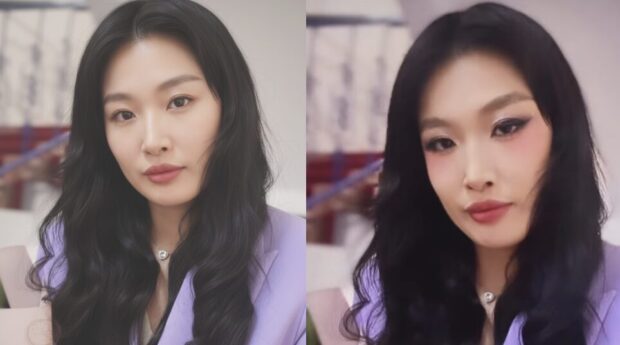
Mongolian makeup trends now frequently feature extremely bright colors like red, orange, and blue eyeshadow, paired with intensely sharp winged eyeliner and fully defined lips, aiming for a dramatic look rather than a natural one. This reflects a desire to utilise excessively heavy make up to accentuate features and stand out, as much as in Korea and Japan, the standards of beauty are much better defined, in Southeast Asia. Miss World’s final rounds are taking place in Vietnam.
It still represents a high-pressure, artificial standard that women are forced to meet to be considered “beautiful”, such as the recent contestant, Enkhtuul Bayarsaikhan, who turns 26, is utilising her social media platform to send out racy type of direct messages, with suggestive images, targeted at all her public followers, akin to using it like a Tinder platform, in exchange for a free coffee, whilst just prior, concurrently purporting to be part of a regulatory organisation all in the same social media Instagram page, meant to be more “prudential”. A clash of ideals.


While contestants are free to express themselves online, their platforms are usually expected to function, consistent with the pageant requirements, rather than personal dating spaces. For the other pageants, it appears, the recent incidents, have caused pageant organisers to relook into such a requirement. When those identities clash, especially if social media activity appears overly suggestive, it can spark controversy, as seen in several recent pageant incidents across Asia.
Whether it is a veneer falling out on stage or the loss of a crown over an explicit image leak, due to a desperate financial circumstances, the events of the 2026 pageant season show that the industry is changing. Fortunately, the true beauties of Miss Grand, are here to increase the beauty score, with Thailand’s Opal Suchata and Philippines’ Krishnah Gravidez, both scoring highest for popularity.
While Miss World focuses on charity (“Beauty with a Purpose”), Miss Universe is still, as stated, perceived as having a higher glamour quotient and more commercial appeal, the highest honours and most prestigious standard to achieve for beauty pageants. Hence, Popspoken has reached out to representatives of the most internationally known pageant title, Miss Universe, for comments, on their requirements and standards for such beauty pageants. Some news reports suggest the necessity of the tightening of such rules in light of such situations.
The public is increasingly forgiving of human imperfections, like chipped teeth or past struggles, but perhaps less forgiving of the intense pressure that leads to these dramatic moments. The future of beauty in Asia seems to be demanding a balance between the aesthetic dream and the relatable, imperfect human reality.
Featured Image Source: Kamolwan Chanago’s Social Media