



From melting self-portraits and surreal subconscious landscapes to monumental hyperrealist sculptures and Impressionist masterworks from Paris, 2026 is shaping up to be one of Tokyo’s strongest years for contemporary and historical art exhibitions alike.
Urs Fischer at Fergus McCaffrey Tokyo — Spot the Difference
Marking his first solo exhibition in Japan, Spot the Difference sees Swiss artist Urs Fischer transform Fergus McCaffrey Tokyo into a psychologically charged meditation on identity, transformation, and self-destruction.

Fischer’s work has long balanced absurdity with philosophical inquiry, collapsing distinctions between permanence and decay, high culture and kitsch, sincerity and performance. Here, the gallery itself becomes part of the conceptual framework: the polished upper galleries contrast sharply against the unfinished sub-basement below, evoking the divide between the conscious and subconscious mind.
At the centre of the exhibition is Mirror, a pair of monumental wax self-portraits, first popularised at his Venice Biennale debut, installed in adjoining rooms separated by a crudely carved opening in the wall. Lit on fire at the exhibition’s opening, the sculptures slowly melt over the course of three months — sagging, collapsing, and pooling onto the gallery floor before eventually being recast anew after the show closes.
The result is less a static exhibition than a living performance about mortality, ego, rebirth, and the instability of identity itself. Downstairs of the Fergus McCaffrey gallery, Fischer extends the exhibition’s themes into an immersive mirrored environment covered in Rorschach-inspired wallpaper depicting holes, repairs, fractures, and illusions. Bronze sculptures and playful drawings populate the space like fragments of the artist’s subconscious, inviting viewers to literally and psychologically “spot the difference.”
The exhibition also resonates strongly within a Japanese context. Fischer’s cyclical destruction and renewal echo Zen Buddhist ideas surrounding impermanence and the dissolution of selfhood, while his use of absurdity recalls the destabilising logic of Zen koans — humour as a path toward revelation.
Ron Mueck at Mori Art Museum
Running from April 29 to September 23, 2026, the Mori Art Museum presents a major retrospective dedicated to acclaimed Australian sculptor Ron Mueck. The exhibition arrives in Tokyo following celebrated presentations in Paris, Milan, and Seoul, and is co-organised with the Fondation Cartier pour l’art Contemporain.
Born in Melbourne in 1958, Mueck first built his career in model-making and special effects for film and television before transitioning into fine art in the mid-1990s. He notably worked at Jim Henson’s Creature Shop, the legendary studio founded by Jim Henson, where craftsmanship, illusion, and emotional realism became central to his artistic language.
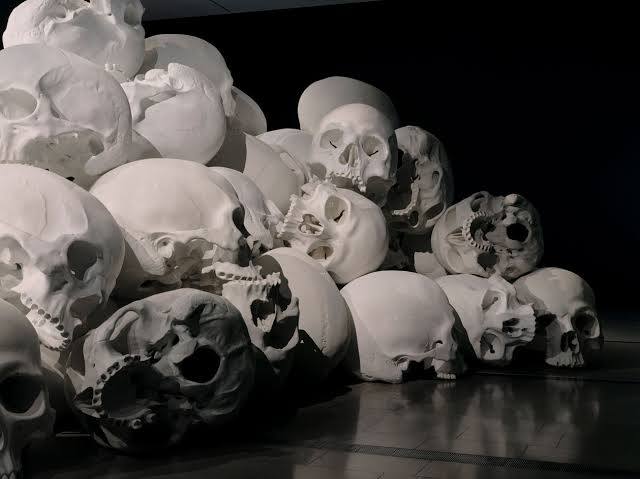
That cinematic precision continues to define Mueck’s sculptures today. Known internationally for his astonishing hyperrealistic figures, the artist manipulates scale to deeply uncanny effect — rendering bodies either monumentally oversized or hauntingly miniature. Every wrinkle, pore, strand of hair, and expression is recreated with startling accuracy, transforming seemingly ordinary human moments into psychologically charged encounters.
Despite his global acclaim, Mueck’s output remains remarkably small. Since first gaining international attention in the landmark 1997 exhibition Sensation: Young British Artists from the Saatchi Collection at the Royal Academy of Arts in London, he has created only around 50 sculptures over three decades. Eleven of those works are included in this Tokyo presentation.
According to Associate Curator Charlie Clarke, Japanese audiences have long responded strongly to Mueck’s practice due to Japan’s deep appreciation for craftsmanship, detail, and figurine culture. This marks Mueck’s second solo exhibition in Japan following his 2008 retrospective at the 21st Century Museum of Contemporary Art, Kanazawa.
Set against the panoramic skyline views of Roppongi Hills Mori Tower, the exhibition promises one of Tokyo’s most emotionally immersive and technically astonishing contemporary art experiences of 2026.
The Spiral Exhibition at MoN Takanawa: The Museum of Narratives
Coinciding with the opening of Tokyo’s new Museum of Narratives, The Spiral Exhibition explores the recurring spiral form across art, science, architecture, philosophy, and society.
Running from March 28 to September 23, 2026, the ambitious exhibition transforms the museum into a multidisciplinary meditation on cyclical systems, growth, movement, and repetition. Combining immersive installations with contemporary artworks and scientific references, the exhibition reflects Tokyo’s continuing embrace of large-scale experiential art programming.
What a Wonderful World: Masterworks from the Musée d’Orsay at Tokyo Metropolitan Art Museum
To celebrate its 100th anniversary, the Tokyo Metropolitan Art Museum will stage one of the most significant, and highly anticipated international art exhibitions of the year beginning November 2026.
What a Wonderful World: Masterworks from the Musée d’Orsay brings approximately 110 works from Paris spanning Realism, Impressionism, Post-Impressionism, and Symbolism. Together, the exhibition examines how artists responded to the profound social and industrial transformations of the 19th and early 20th centuries.
Highlights include Starry Night over the Rhône by Vincent van Gogh and The Gleaners by Jean-François Millet, alongside works by Claude Monet, Pierre-Auguste Renoir, Paul Gauguin, and Paul Signac.
Installed within Ueno Park’s historic museum complex, the exhibition offers a quieter but no less emotionally resonant counterpoint to the spectacle-driven contemporary shows elsewhere in Tokyo. The Tokyo Metropolitan Art Museum is located approximately seven minutes on foot from Ueno Station’s Park Gate.
Image credit: Wallpaper