


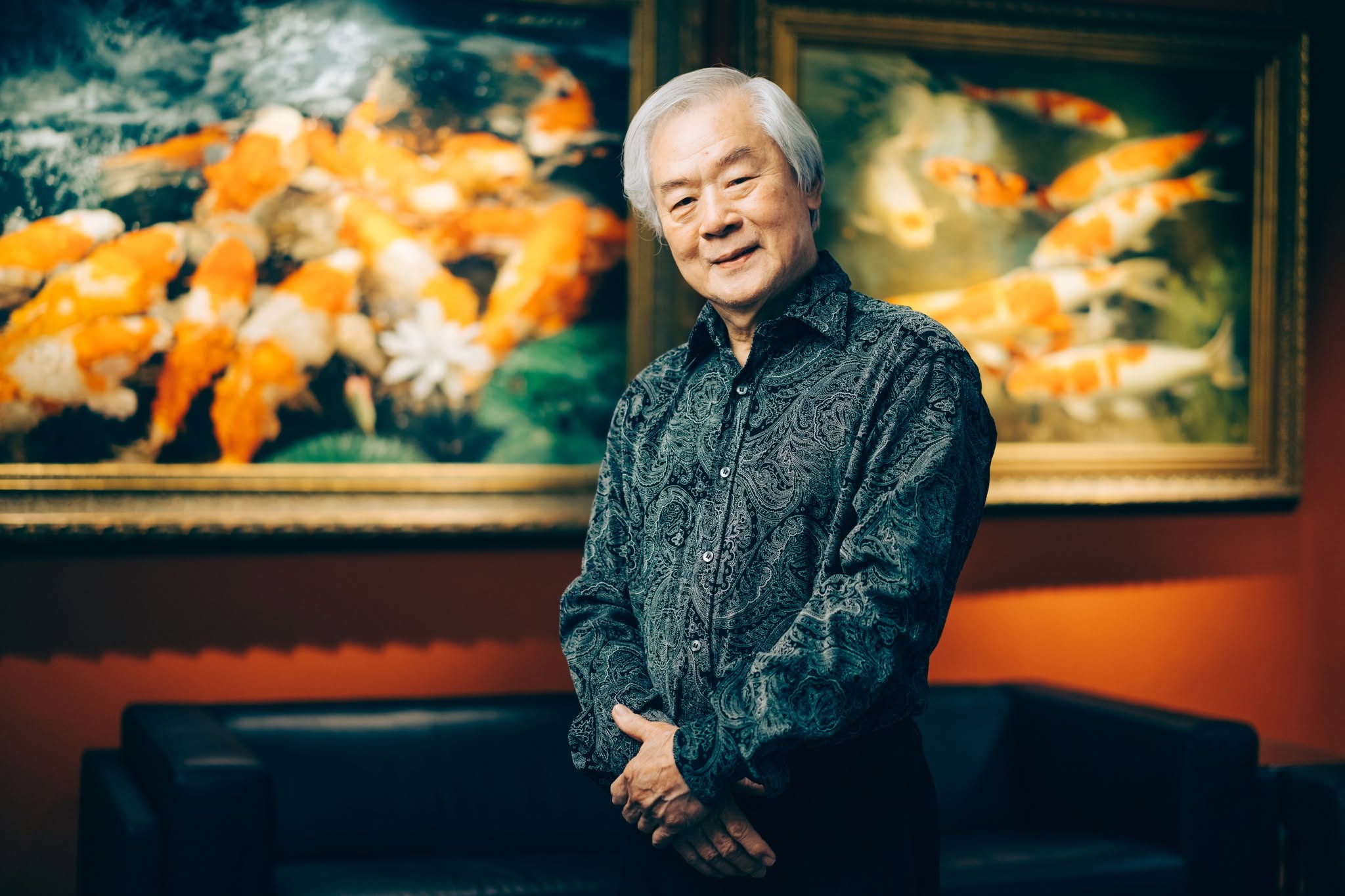
Singapore has lost one of its greatest visual storytellers. Acclaimed social realist and Cultural Medallion recipient Chua Mia Tee died on 10 July at the age of 94, following a recent hospitalisation for pneumonia. According to his daughter, Chua Yang, he passed away peacefully at home, surrounded by the paintings that defined both his life’s work and Singapore’s collective memory.
For generations of Singaporeans, Chua’s canvases have done more than decorate museum walls. They have documented the hopes, struggles and quiet resilience of ordinary people, preserving moments that might otherwise have faded into history. Long before photography became ubiquitous, his brush immortalised a nation in transition.
Born in 1931, Chua’s artistic career unfolded alongside Singapore’s own transformation. His paintings chronicled the social realities of the 1950s and 1960s, a period shaped by labour movements, migration, rapid urbanisation and the optimism of self-governance. Rather than romanticise hardship, he painted workers, students, families and communities with remarkable empathy, portraying dignity in everyday life.
While many painters sought beauty in landscapes or abstraction, Chua found something far more enduring in the everyday lives of ordinary people. His canvases captured workers, students, families and communities with remarkable honesty, becoming not just works of art but historical documents of a young nation finding its identity.
Born in 1931, Chua’s artistic career unfolded alongside Singapore’s own transformation. His paintings chronicled the social realities of the 1950s and 1960s, a period marked by labour movements, rapid urbanisation and the hopes and anxieties of independence. Rather than romanticise hardship, he painted with empathy, presenting his subjects with dignity and quiet resilience.
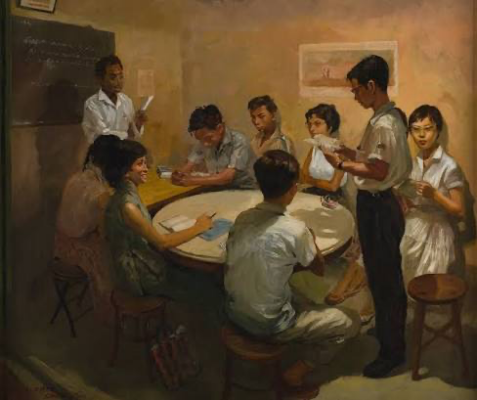
No work embodies this more than National Language Class (1959), arguably one of Singapore’s most recognisable paintings. The scene depicts adults from different backgrounds gathered in a classroom learning Malay, then promoted as the national language. The painting has since become an enduring symbol of multiculturalism, nation-building and the shared effort required to forge a common identity. Decades later, it continues to resonate because it speaks not just about language, but about aspiration and belonging.
Another landmark work, Epic Poem of Malaya (1955), reflects the political and social consciousness that would come to define Chua’s practice. Together with National Language Class, it cemented his reputation as Singapore’s foremost master of social realism, using art not simply to record events, but to explore the human stories behind them.
Throughout his practice, Chua remained committed to social realism, and resisted spectacle in favour of sincerity. His compositions are deliberate and restrained, placing human stories above spectacle. Whether portraying factory workers, street vendors or neighbourhood life, his paintings invite viewers to slow down and consider the lives that built modern Singapore. There is an emotional clarity to his work that transcends changing artistic trends.
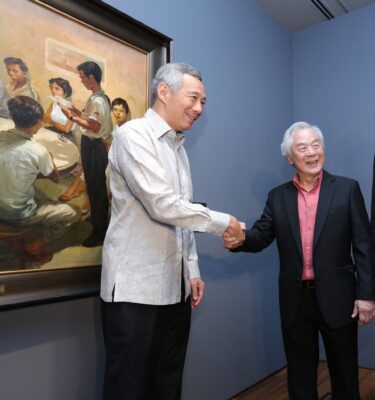
Yet Chua’s significance extends beyond nostalgia. In an era increasingly dominated by digital imagery and rapidly changing cityscapes, his paintings remind us that progress is ultimately measured through people rather than infrastructure. His works ask difficult questions that remain relevant today: Who gets remembered? Whose labour shapes a nation? What does community look like when cities evolve faster than memory can keep pace?
His influence is visible across generations of Singaporean artists who continue to explore themes of identity, migration and everyday life. While contemporary practices have expanded into installation, performance and digital media, Chua’s commitment to portraying ordinary people with compassion remains a powerful benchmark.
A retrospective of Chua Mia Tee is therefore more than a survey of an artist’s career. It is an invitation to revisit Singapore’s collective memory through one of its keenest observers. Each painting becomes a conversation between past and present, reminding audiences that history is not made solely through political milestones or architectural icons, but through classrooms, coffee shops, workshops and homes.
As Singapore continues to redefine itself, Chua Mia Tee’s art offers something increasingly rare: a patient, human-centred record of a nation in motion. His canvases continue to speak because they were never simply about the past. They were, and remain, about the people who make a country worth remembering.
Image credit: Tallenge and National Gallery of Singapore