


Singaporean homegrown brand, and classy tea house TWG Tea opens its first Mongolian boutique at Shangri-La Mall (Ulaanbaatar), introducing its distinctive tea culture and Takeaway concept to Mongolia, marking the brand’s latest step in its international expansion in May 2026.
For TWG Tea, the opening is more than another retail outpost. It brings a distinctly Singaporean interpretation of luxury to one of Asia’s increasingly cosmopolitan capitals, translating the ritual of tea into a contemporary retail and hospitality experience, whilst retaining distinctive elements of Mongolia’s cultural heritage.
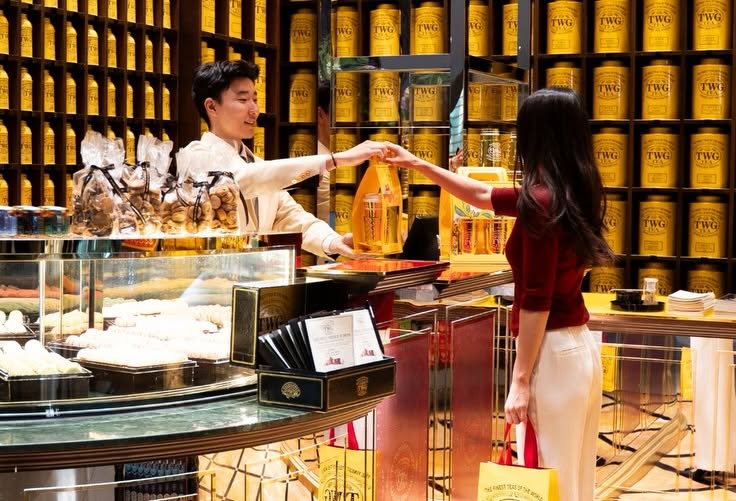
The Ulaanbaatar boutique offers a selection of more than 1,000 single-estate harvests and exclusive blends, including some of TWG Tea’s signature names such as Silver Moon Tea, 1837 Black Tea and French Earl Grey. The space also carries curated gift sets and tea accessories, extending the experience beyond the cup itself.
Central to the new destination is TWG Tea’s Takeaway Tea concept, with more than 88 fine blends available to be prepared for guests on the move. It is an approach that makes the traditionally leisurely ritual of tea more compatible with contemporary city life.
The setting is equally important. TWG Tea’s boutiques are designed around a recognisable vocabulary of polished wood, gold detailing, burnished brass and considered displays, creating an atmosphere that positions tea alongside the wider language of luxury retail.
Tea’s Place in Mongolia
There is also an interesting cultural resonance in bringing the brand to Mongolia. Tea has long held a place in Mongolian hospitality and everyday life, although its traditions and tastes are markedly different from the European-style tea salon experience that TWG Tea has helped popularise internationally.
The result is less a collision of cultures than a meeting point: Mongolia’s longstanding relationship with tea encountering a modern luxury brand from Singapore.
For TWG Tea, meanwhile, Ulaanbaatar represents another step in its expansion across Asia and beyond. With the brand now present in more than 70 locations globally, the Mongolian opening extends its proposition into a market where luxury, hospitality and international retail are developing rapidly. And for Ulaanbaatar, the arrival of a Singapore luxury name at Shangri-La Mall is another small indication of the city’s changing retail landscape — one in which global brands increasingly meet a new generation of consumers looking for experiences as much as products.
Mobilising Tea and Cafe Culture
Tea, in this case, becomes the meeting point between Singaporean craftsmanship and Mongolia’s evolving cosmopolitan identity. TWG Tea arrives, therefore, not to introduce Mongolia to tea, but to introduce another interpretation of it.
Where earlier cafés helped establish the idea of coffee as a social and lifestyle experience, today’s Ulaanbaatar consumer is increasingly familiar with the language of speciality beverages, international hospitality and luxury retail. Tea, meanwhile, is hardly foreign to Mongolia. It has long been woven into hospitality and daily life, although Mongolian tea traditions look very different from the European-inspired tea culture TWG Tea has developed.
Its Ulaanbaatar boutique brings together the brand’s extensive collection of teas and exclusive blends with its Takeaway Tea concept, allowing fine tea to be experienced in a more contemporary, on-the-go format.
There is something quietly symbolic about the progression. Bitsy & Co, the spanking new breakfast by day and cocktail by night area, belonged to a moment when a latte could feel like a discovery. TWG Tea belongs to a moment when Ulaanbaatar is ready to engage with the global language of luxury on its own terms.
The city’s transformation has not happened overnight. It has been built through cafés, restaurants, hotels, boutiques and a generation of consumers becoming progressively more curious about what lies beyond familiar categories. And perhaps that is what makes the TWG Tea opening worth watching.
Luxury retail in Mongolia is no longer simply about importing an international name. The more interesting question is what happens when an established global brand enters a city whose own tastes are evolving — and where the culture of the modern café itself is still relatively young.
From the first unfamiliar latte to a carefully brewed fine tea, Ulaanbaatar’s beverage culture has come a long way.