


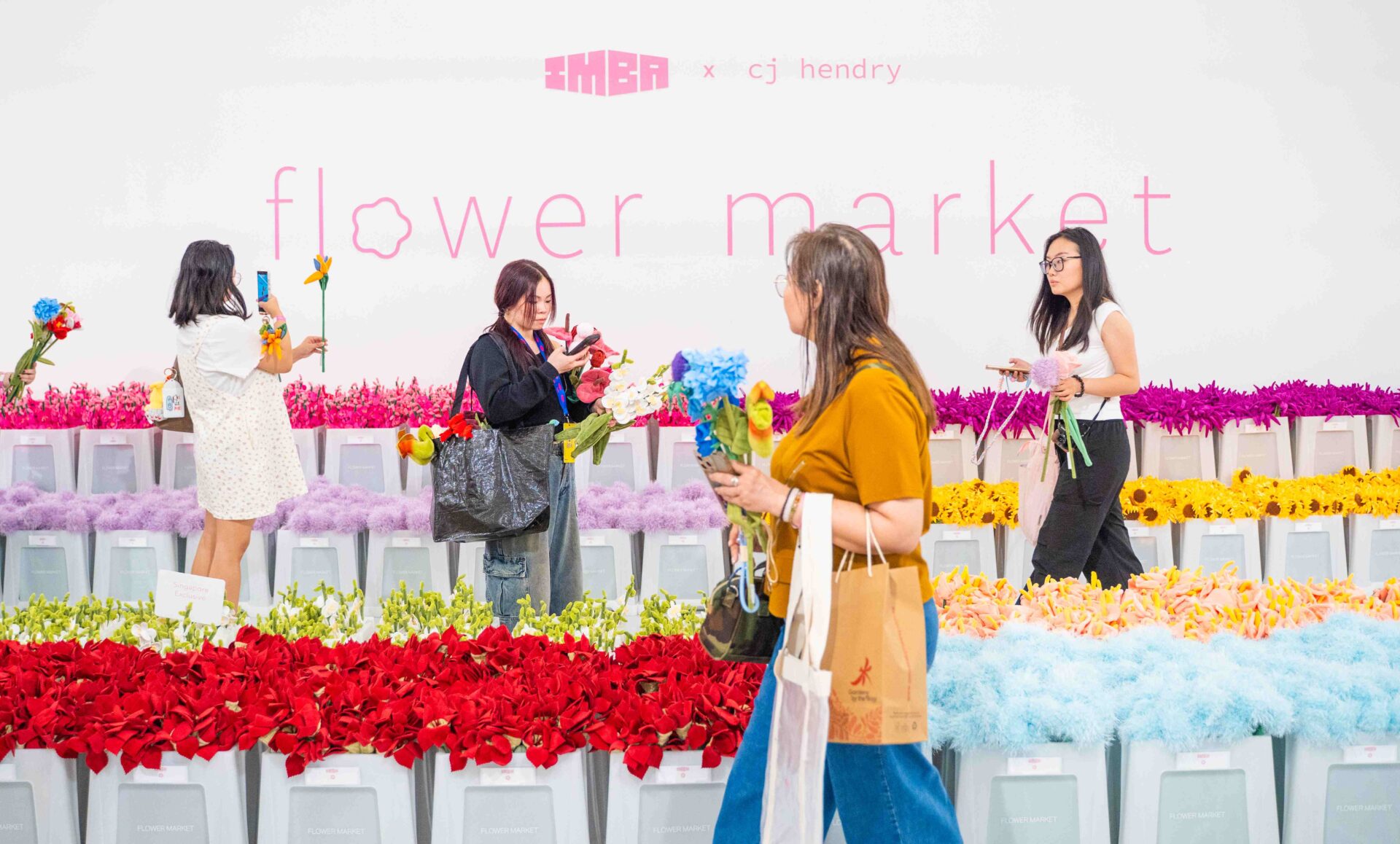
Flower mania has long bloomed in Singapore. The city turns out annually for Tulipmania’s imported Dutch blossoms, Orchid Extravaganza’s celebration of the national flower and even Jewel Changi Airport’s current sprawling LEGO botanicals displays. Yet while families patiently posed with LEGO, a different kind of floral fever unfolded at Australian artist CJ Hendry’s Flower Market. Its opening day was marked by viral videos of visitors rushing to scoop up plush blooms, transforming what was conceived as an immersive art experience into one of the city’s widely discussed collecting frenzies.
Designed as an immersive experience inspired by traditional flower markets, the pop-up invited each visitor to take home one plush stalk for free, without pressure of any additional purchases with a simple sign-up beforehand. Additional plush flowers were sold at S$7 apiece. The spectacle quickly raised an uncomfortable question: when does an artistic experience stop being about art, and become little more than a merchandise scramble? At its core, Flower Market presents itself as participatory art.
Hendry, best known for her hyper-realistic pencil drawings of everyday objects ranging from a Barbie doll’s dishevelled head to inflatable crowns, has built a career around transforming familiar experiences into immersive environments.
But many Singaporeans attending the installation seemed less interested in the artistic premise than the collectible itself.
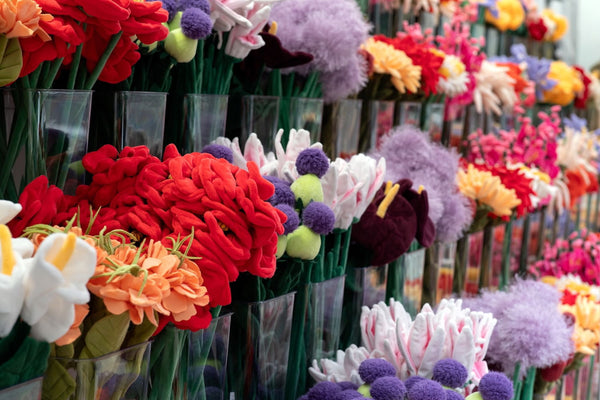
Videos distributed online showed crowds moving rapidly through the Singapore installation, with a handful of visitors filmed for their unsavoury behaviour, thronging and showing aggression to the operational teams that were setting aside the 8 unique flowers, to be collected and taken for free, that were typically all given out by 11.00am daily.
Netizens questioned the hype, with several arguing that the frenzy reflected little appreciation for the artwork itself and more enthusiasm for obtaining a collectible. Similar scenes had unfolded overseas.
During the New York edition of Flower Market, presented in partnership with a beauty brand, the NYPD shut the Roosevelt Island activation over public safety concerns after crowds descended on the site, prompting organisers to relocate the experience to Brooklyn at the eleventh hour. With organisers ultimately foregoing the glamorous bird’s-eye drone shots originally envisioned for the Clé de Peau collaboration, the images that emerged instead were far less polished. While Sydney’s edition did witness attendees jostling for the coveted plush blooms, with an altercation breaking out at one point, Singapore’s edition once again reignited questions about where participatory art ends and consumer spectacle begins.
“What exactly is the rush?” one commenter wrote on Instagram. “They’re probably just going to sit there collecting dust.”
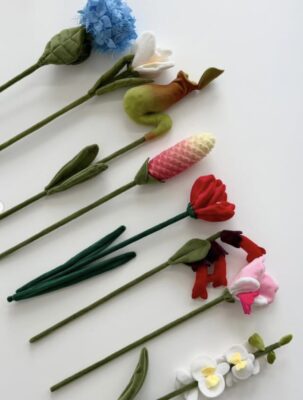
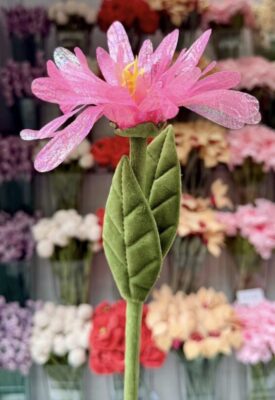
Part of the frenzy stemmed from the designs themselves. Visitors understood that eight Singapore-exclusive plush flower designs had been created for the event: the pitcher plant, ginger flower, frangipani, red lipstick ginger, Vanda Miss Joaquim, hibiscus, hydrangea and hyacinth.
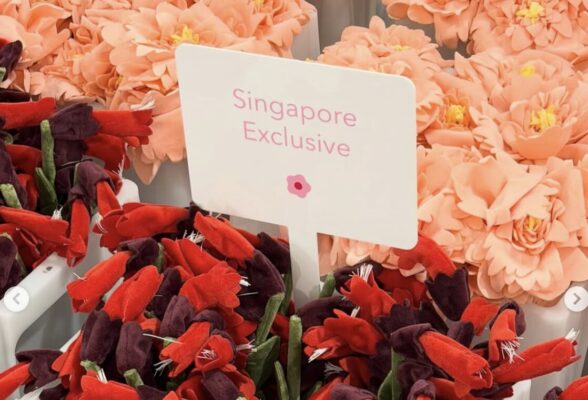
For completionists, obtaining the full bouquet became an unofficial mission. Online trading groups quickly emerged, with collectors swapping duplicates in hopes of assembling the complete set. Others turned to resale platforms.
Yet confusion soon surfaced when attendees realised there appeared to be a ninth design entering circulation despite the original emphasis on eight limited Singapore editions. For some, the issue was practical: had they queued for hours only to discover their collection was incomplete? For others, it struck at something deeper.If scarcity forms part of an artwork’s narrative, what happens when that scarcity shifts? Limited editions have long relied on trust between artist and audience. Whether in printmaking, designer toys or contemporary sculpture, collectors derive meaning not merely from ownership, but from the understanding that an edition represents a deliberate artistic decision.
Introducing an unexpected addition, to boost eleventh hour flower sales, inevitably raises more questions.
Was the original limitation misunderstood? Was it always part of the plan? Or does commercial demand eventually reshape artistic boundaries? Without official press statements released from the Brooklyn based artist organisers, the ambiguity itself became the story, with a few explanatory notes left by the artist on her Social Media, regarding how the initial intent was to allow joy to be distributed for free and floral art appreciated by the masses, and was not purely meant to be shaped by the aggressive commercialisation of the plush flowers, with blatant disregard of consumer expectations to try to retrospectively raise the prices of flowers, as the obverse buying or spending limit for the general, non-limited, more than 30 floral CJ Hendry plush flower varietals in Singapore reselling at approximately S$10 – S$15.
Further, there have been invites, to provide a paid service on Singapore reseller platforms such as Carousell, to assist those willing to purchase, yet were not allotted the free registration tickets to enter.
Kitsch In The Age Of The Queue
The irony is that Hendry’s work has always flirted with kitsch. She elevates the everyday through meticulous execution and spectacle: giant balloons, oversized installations and playful interactions designed to collapse the distance between gallery and audience.Yet Singapore’s response transformed that playfulness into something else entirely.
“After those scenes, I feel disgusted,” wrote one netizen on the Instagram page. “I have a ticket for tomorrow, but I no longer feel like attending. It doesn’t feel like an artistic event anymore.” Another lamented: “It’s a shame when the artist commercialises her art to this extent.”
On a hearty note, there were attendees, that wished to collect these flowers, for whatever reason or special occasion, and are openly trying their luck to see if Organisers would genuinely incur costs and effort to fulfil such a wish: “Just truly hoping any kind of way I can receive the Papilionanthe Miss Joaquim and the blue bluehead gilia flower for my wedding bouquet.”
Whether fair comment or not, the feedback reveals anxieties about what audiences expect from contemporary art. Should art remain inaccessible, contemplative and untouched by commerce? Or is accessibility itself the point — allowing people who might never enter a traditional gallery to engage with art through an object they can hold, collect and bring home?
Free Flowers, Costly Behaviour
Complicating matters further were reports that some walk-ins managed to obtain free flowers despite prior registrations, frustrating attendees who had followed instructions. Organisers have since kept to their promise, by only allowing entry for pre-registered sign ups allocated, for 13 – 14 June 2026, and released one additional day to accommodate for those who received the free registration access, but were unable to attend the event due to the crowd situation.
The public promise of one free flower transformed plush objects into prizes. The queue ceased to be part of the experience and instead became an obstacle between visitors and acquisition. The flowers themselves became secondary.
The crowd became the installation.
Enter JUJU
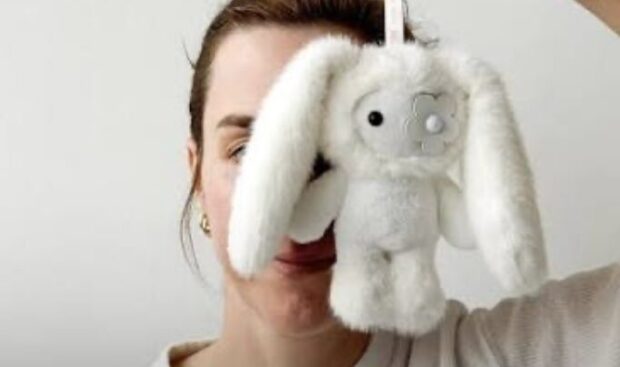
If Flower Market represented one side of Hendry’s practice, Singapore is about to witness the other. Launching a week after the floral chaos is JUJU, an inflatable experience centred on Hendry’s new bunny-like collectible character. The ticketed installation, running from June 20 to July 18 2026, marks the world premiere of the project at Gardens by the Bay that costs an entry-free from S$10.
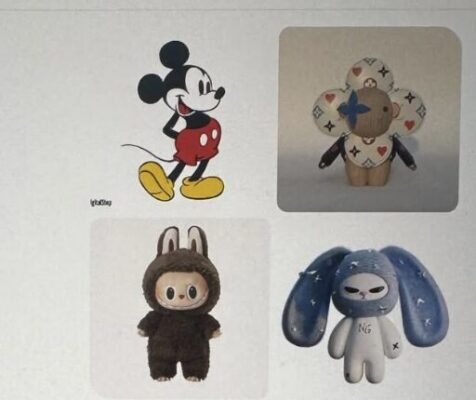
The backstory is unmistakably contemporary. Having never created a toy before, and recognising art is not made in a vacuum, Hendry openly ethically declared and acknowledged turning to artificial intelligence during the ideation process, prompting image-generation tools to draw from the visual language of designer toys, cartoon mascots, such as Labubu and Louis Vuitton’s luxury iconography with well-known and established Japanese pop artists of our time. To some, it reflects a refreshingly transparent embrace of modern creative tools; to others, it may read as an outsourcing of imagination itself.
The artist’s instructions to ChatGPT, reportedly specified that while similar elements could be referenced, from the above four images she input, but the resulting character, was something she wanted to remain distinct: unique in its own way, featuring the two main requests: firstly, king bunny-like ears and secondly, a simple flower covering one eye.
Thirty seven iterations later, CJ finally settled on JUJU, after a host of names were considered: Giggle Goose, Boba Bunny, Nibbey Nub, Flobo, Dibble Doo, Glimsy, Whoops Doo, Bye-Bye Bunny, Poppy Zoo, Puzzle Pup, Kazoo and Pippoo.
High Art, Low Art, Or Just Art?
Perhaps that is why the debate surrounding Flower Market feels so timely. A hyper-realist artist stages a plush flower giveaway. An immersive floral installation becomes a secondary resale marketplace. An AI-assisted bunny debuts as a collectible toy.
Visitors who may not know Hendry’s drawings line up for hours. Collectors obsess over completing a bouquet. Critics accuse the work of becoming over-commercialised. Supporters celebrate art that people actually want to experience.
The divide between high art and kitsch has never been neat. Andy Warhol painted soup cans. Takashi Murakami turned smiling flowers into luxury collaborations. KAWS transformed vinyl toys into auction-house darlings. Perhaps the real question is not whether contemporary art has become commercial.
It always has been. Instead, Singapore’s flower frenzy asks whether audiences are still engaging with the art itself, or whether, somewhere between the queue and the checkout counter, collecting has become the performance, and consumption the medium.
Image Credit: IMBA Theatre Singapore