


Asia’s art scene is increasingly defined by the conversations taking place across borders. In Singapore, galleries are building relationships with their counterparts in Taiwan; in Bangkok, new museum spaces are expanding the possibilities for contemporary art; and in Taipei, a packed autumn calendar is bringing galleries, collectors and artists together.
Here are five exhibitions and art-world highlights worth knowing, spanning established institutions, international showcases and the partnerships shaping the region’s cultural landscape.
1. Singapore meets Taiwan, artcommune and Liang Gallery
The relationship between Singapore and Taiwan’s art scenes offers a compelling starting point for a regional art itinerary. Singapore gallery artcommune and Taipei’s Liang Gallery have brought artists from both sides of the Straits into conversation through Mirror Straits, a presentation exploring the connections between Singaporean and Taiwanese modern-art histories.
The exhibition paired Taiwanese artists selected by Liang Gallery with Singapore artists represented by artcommune, including Chen Wen Hsi, Cheong Soo Pieng, Tan Choh Tee and Wong Keen. Together, their works reflect the ways artists have negotiated tradition, modernity and cultural identity across generations.
While Mirror Straits will conclude its Taipei presentation on 8 November, the gallery relationship remains particularly relevant this month. Artcommune is preparing for its debut at ART TAIPEI 2026, where it will present an intergenerational selection of Singapore artists, including Cheong Soo Pieng, Wong Keen, Boo Sze Yang, Nathan Yong and Tam Kwan Yuen.
The collaboration offers a glimpse into how Singapore galleries are building visibility for local artists beyond the domestic market, while creating opportunities for Taiwanese audiences to encounter Singapore’s artistic heritage.
Catch: ART TAIPEI 2026, 30 October–2 November, at Taipei World Trade Center, Exhibition Hall 1.
2. DIB Bangkok, a new destination for contemporary art
Bangkok’s contemporary-art landscape has gained a significant new presence with DIB Bangkok, a museum dedicated to presenting Thai and international art. Its programme offers a reason to look beyond the city’s familiar cultural attractions, with exhibitions that reward visitors willing to spend time with works exploring movement, perception and the human experience.
One of its key exhibitions, Giving Life, runs from 26 September 2026 to 3 May 2027. Bringing together more than 160 works by 33 Thai and international artists, the presentation considers transformation and the forces that animate life. The participating artists include Alexander Calder, Paul Chan, Izumi Kato, Caitlin Keogh, Tuan Andrew Nguyen, Tobias Rehberger and Rirkrit Tiravanija.
The exhibition’s appeal lies in the range of artistic approaches it brings together, from sculpture and installation to works that challenge conventional ways of looking at art. Rather than treating the museum as a succession of individual displays, Giving Life invites visitors to consider how different artistic practices can speak to one another.
DIB’s programme also includes Straight Up Sunset Light by American artist James Turrell, whose practice explores light, space and perception. The work offers a contrasting experience to the group exhibition, placing the viewer’s own perception at the centre of the encounter.
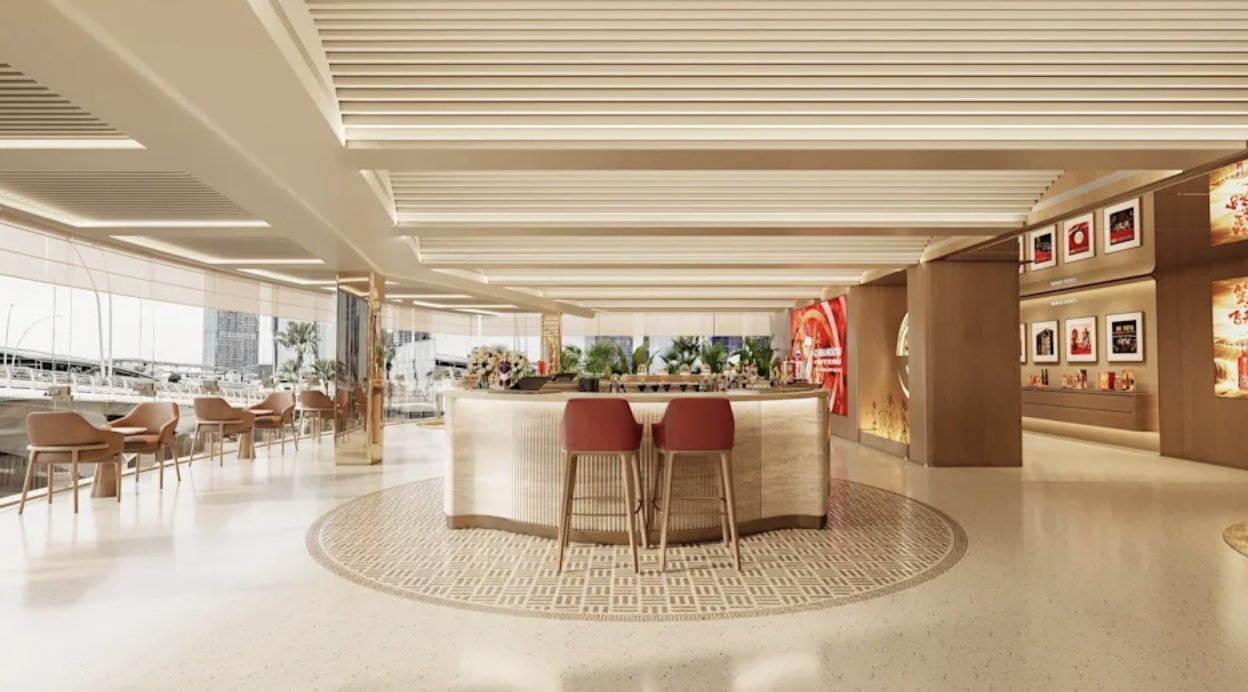
Beyond the galleries, the museum’s architecture, store and Watthu-Dib Bistro & Bar make it possible to extend the visit into a longer cultural outing. For travellers interested in how contemporary art institutions are evolving, DIB is worth considering as part of a broader Bangkok itinerary.
3. Bangkok Art Biennale, ANGELS & MARA
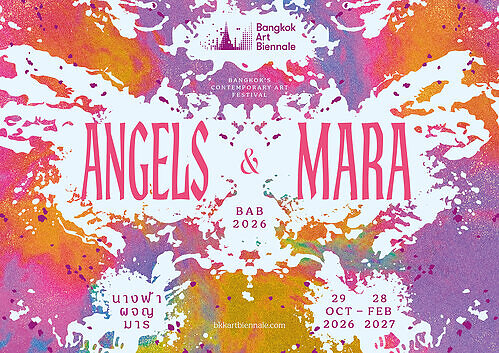
Running from 29 October 2026 to 28 February 2027, the Bangkok Art Biennale returns with ANGELS & MARA, a programme that draws on the Thai capital’s identity as the City of Angels and the Buddhist symbolism associated with Mara, a figure connected with temptation and obstacles to enlightenment.
The biennale brings together artists from different countries and disciplines, with works distributed across cultural institutions and other venues throughout Bangkok. Its thematic territory spans spirituality, technology, identity, conflict and transformation, offering multiple entry points for visitors interested in the relationship between contemporary art and the societies in which it is made.
The distributed format is part of the appeal. Rather than limiting the experience to a single exhibition hall, the biennale encourages visitors to encounter art across the city, creating connections between contemporary artistic practices and Bangkok’s architectural, cultural and spiritual settings.
Art without borders
Across Singapore, Bangkok and Taipei, the common thread is not a single artistic style, but the growing network of institutions, galleries and artists connecting audiences across Asia.
Artcommune and Liang Gallery demonstrate how gallery partnerships can bring different art histories into conversation. DIB Bangkok offers a new setting for engaging with international contemporary art, while the Bangkok Art Biennale and Taipei’s autumn art calendar give visitors opportunities to explore the region through exhibitions rather than conventional sightseeing.
For travellers, these programmes offer a reason to plan a trip around culture. For collectors and art enthusiasts, they provide a way to discover new artists and follow the relationships shaping the market. And for the region’s galleries, they are part of a broader conversation about how Asian art can travel, find new audiences and establish its place on an international stage.