

Paris has always understood the commercial value of culture. From its grand department stores and historic maisons to contemporary art fairs and experimental dining rooms, the city has developed an ecosystem in which artistic expression and commercial ambition frequently intersect.
October 2026 offered a particularly revealing example. As demonstrations and episodes of looting unsettled parts of France, the international art and luxury communities continued to gather in Paris for Art Basel Paris, Design Miami and a programme of private events, exhibitions and brand collaborations.
The contrast was striking: outside the city’s cultural institutions, uncertainty; inside the Grand Palais, collectors were still committing millions to contemporary art.
When unrest meets the art market
The demonstrations and subsequent unrest across France raised immediate concerns for the country’s retail, tourism and cultural sectors. Luxury retailers increased security, with several prominent establishments around Place Vendôme preparing for possible disruption.
Yet the initial commercial performance of Art Basel Paris suggested that the appetite for high-value art remained resilient.
According to market reporting, 306 works had been sold for approximately US$148 million by the evening of 21 October. Seven- and eight-figure transactions were reported during the opening days, including Julie Mehretu’s Rise of the New Suprematists, offered by White Cube at US$7.8 million.
The distinction is important. The unrest did not generate these sales; rather, it demonstrated that international collectors were prepared to continue doing business despite an unsettled environment.
The situation changed considerably when Art Basel announced on 22 October that the fair would conclude at 7pm the following day, cancelling its scheduled Saturday and Sunday programme.
For established galleries that had already secured major transactions during the VIP previews, the commercial consequences may have been more manageable. Smaller and independent galleries, however, faced the loss of two important trading days.
The decision subsequently became a point of contention among French dealers, with representatives questioning whether the Sunday closure was necessary and seeking concrete proposals to address exhibitors’ losses.
It was a reminder that the art market operates on more than the value of the objects displayed. Access, timing, international mobility and the ability to bring collectors into a room remain essential components of its commercial infrastructure.
Perrier-Jouët, where art becomes part of the brand’s identity
One of the more interesting luxury collaborations during Paris Art Week came from Maison Perrier-Jouët, whose relationship with the arts stretches back more than a century.
Founded in Épernay in 1811 by Pierre-Nicolas Perrier and Rose-Adélaïde Jouët, the historic Champagne house has long drawn inspiration from nature, botany and artistic craftsmanship.
Its most recognisable visual signature emerged in 1902, when Art Nouveau artist Émile Gallé created the Japanese anemone motif that would become synonymous with the Maison’s Belle Époque identity.
This artistic heritage has continued through collaborations with contemporary creative talents, positioning the house within a broader conversation about design, collectible objects and the relationship between nature and luxury.
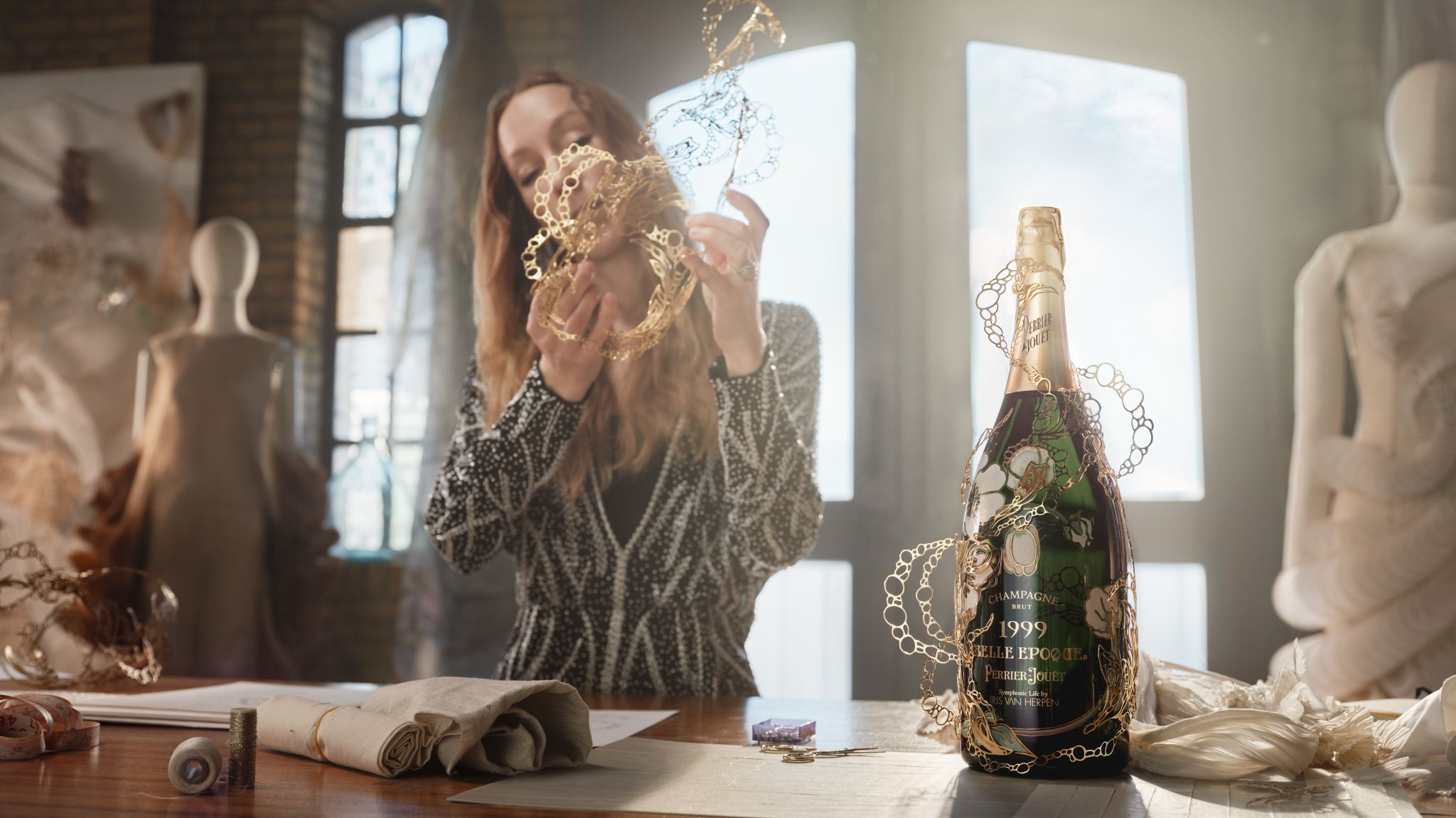
For Paris Art Week 2026, Perrier-Jouët brought this philosophy into a collaboration with Dutch fashion designer and artist Iris van Herpen.
The partnership centred on a collection of rare and collectible creations, including the one-of-a-kind Symphonic Bloom Collector’s Piece and limited editions made available through Le Cercle, Pernod Ricard’s private society.
The collaboration extended beyond the unveiling itself. The Peninsula Paris hosted a week-long residency, beginning with an international press dinner and continuing with private experiences, including a specially developed Champagne and food pairing by Chef David Bizet.
Meanwhile, the Maison’s Be More Flower campaign appeared at Printemps and Galeries Lafayette, alongside a dedicated installation at Paris Charles de Gaulle Airport. Its presence also extended into selected luxury bars and restaurants across the capital.
What makes the collaboration particularly noteworthy is the way the brand uses artistic heritage as a framework for contemporary luxury positioning. Rather than relying solely on traditional product visibility, Perrier-Jouët connects its identity to fashion, collectible design, hospitality and cultural programming.
It is an approach that reflects a wider shift in luxury branding: cultural relevance is increasingly built through experiences and creative partnerships.
WE ARE ONA, when the dining table becomes an artwork
Another compelling example came from WE ARE ONA, the creative culinary studio founded by Luca Pronzato.
During Art Basel Paris, WE ARE ONA presented DALAD’S, a collaboration with contemporary artist Rirkrit Tiravanija and chef Dalad Kambhu.
Running from 19 to 25 October at a private location near Place de l’Étoile, the temporary restaurant brought together contemporary art, Thai culinary traditions, architecture and hospitality.
Tiravanija created an installation featuring two stainless-steel boats, referencing traditional Thai fishing boats and waterways. Reimagined as communal dining tables, the structures incorporated steam pots, allowing food preparation to become part of the artistic environment.
Chef Dalad Kambhu developed a contemporary interpretation of Thai cuisine, drawing on traditional flavours and recipes while incorporating modern techniques.
The concept reflects Tiravanija’s longstanding interest in participation, social interaction and the everyday rituals of communal life. Here, the act of sharing a meal becomes an integral part of the artwork.
For WE ARE ONA, the project also illustrates how gastronomy can operate as a creative discipline in its own right. Food is no longer simply an accompaniment to an exhibition or a private event. It becomes the medium through which guests experience art, design and cultural exchange.
It is an increasingly relevant model for luxury hospitality, particularly as brands and cultural institutions seek experiences that offer something beyond conventional dining.
London, 8 December: Jan van Huysum’s exceptional floral pendants
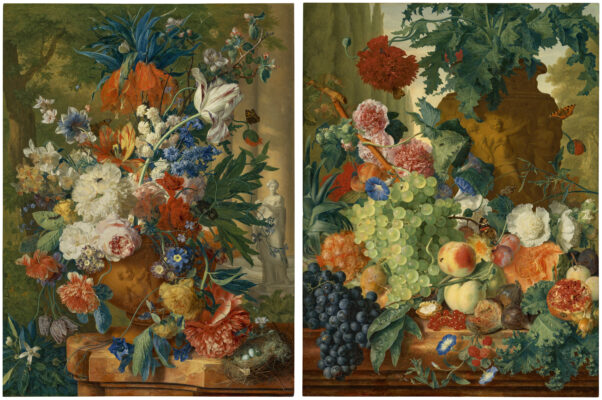
The international art calendar now turns towards London, where Christie’s will present two remarkable paintings by Dutch still-life master Jan van Huysum in its Old Masters Evening Sale on 8 December 2026.
Painted in the early 1730s, the works demonstrate van Huysum’s extraordinary command of colour, light, texture and composition.
In “A Vase of Flowers”, roses, hyacinths, gentians, peonies and other blooms emerge from an elegant terracotta vessel. Its companion painting, “Fruit with Flowers”, presents an abundant arrangement of peaches, grapes, figs, plums, redcurrants and a pomegranate, accompanied by flowers and a sculpted vase.
The paintings are particularly interesting because of the artist’s working method. Van Huysum was famously meticulous, sometimes waiting months for particular flowers to bloom so that he could observe and paint them from life.
Both works were dated across two consecutive years: 1731–32 and 1732–33 respectively. Their compositions bring together botanical specimens that would not necessarily have appeared simultaneously in nature.
Their provenance is equally distinguished.
The paintings are recorded in the celebrated Hesse-Kassel collection in 1783, before passing through the Baring banking family and subsequently into the collection of Alfred de Rothschild. They later formed part of the collection at Exbury House, associated with Lionel Nathan de Rothschild and his renowned horticultural interests.
The works have remained together for generations and have been held in a private English collection for approximately eighty years.
Their appearance at Christie’s therefore represents more than another high-value auction. It offers collectors an unusual opportunity to acquire two historically connected works that demonstrate the sophistication of the Dutch Golden Age still-life tradition.
The paintings are scheduled to be exhibited in London from 4 to 8 December, following a New York presentation concluding on 16 November.
The next chapter of cultural luxury
From Paris to London, the coming months underline the increasingly interconnected nature of the international luxury economy.
Art fairs create commercial opportunities for galleries, while fashion houses, heritage brands and hospitality operators use cultural collaborations to develop new audiences and experiences.
The disruption in Paris also demonstrated that the market’s resilience should not be confused with immunity. Large transactions can continue even when smaller participants face significant operational challenges.
For the luxury sector, the longer-term opportunity lies in building meaningful relationships with art, design, architecture and gastronomy. And as the calendar moves towards Christie’s December sales, the enduring appeal of exceptional craftsmanship, historical provenance and collectible works remains firmly in focus.