



For Asia, Miss World has long been more than an annual contest. It has offered a platform for women to represent their countries, communicate causes close to their hearts and introduce international audiences to stories that might otherwise remain beyond the spotlight.
Across cinema, fashion, business and international pageantry, its women have repeatedly challenged expectations, built careers in entertainment across borders and reshaped the way the world sees the region. Their achievements tell a story that extends well beyond appearances. They are stories of ambition, longevity and the ability to turn a defining moment into a lasting legacy.
Now, Singapore has a new representative preparing for her own international moment.
Newly crowned Miss Universe Singapore 2026, Vion Erico Tan is expected to travel to Puerto Rico ahead of the 75th Miss Universe finals on 24 November. Miss World has long championed its ‘Beauty with a Purpose’ ethos, grounded on humanitarian efforts, whilst Miss Universe, by contrast, offers a global platform to showcase beauty, for female empowerment and self-expression, leadership, advocacy and personal ambition.
It leads is the world’s most coveted pageant titles, placing a strong emphasis on stage presence, runway technique, as well as overall physical stature, body confidence and performance in the fashion segments. Contestants are expected to demonstrate poise, composure, and the ability to command a stage, making any national placement a highly sought-after achievement in international pageantry.
Across Southeast Asia, Thailand’s Tharina Botes, Vietnam’s Nguyễn Quỳnh Anh and the Philippines’ Bea Millan-Windorski bring distinct strengths to Miss Universe 2026, and are, subjectively picked as some of the top Asian contenders participating in this year’s pinnacle of beauty pageants.
Miss World’s ‘Beauty with Purpose’ Platform to Stardom
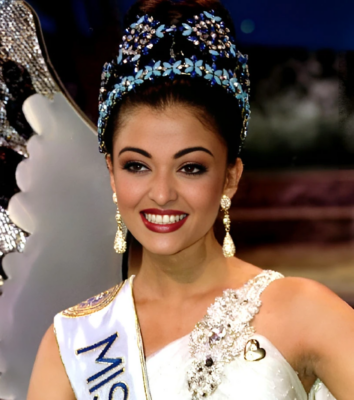
Few names in Asia embody the enduring legacy of Miss World quite like South Asian Bollywood heavyweight, Aishwarya Rai Bachchan.
Crowned Miss World in 1994, the charismatic Indian actress, with a megawatt smile, transformed a pageant victory into an extraordinary international career spanning film, fashion and humanitarian work. Her journey became a defining example of how a national title could open doors to a much larger cultural platform.
Her winning answer at the televised Finals, on what qualities should Miss World embody? Aishwara was composed, articulate and confident. She responded fluently to words of this effect.
The Miss Worlds we have to date, are proof enough that they have Compassion. Compassion for the underprivileged, not only the people that have Status and Stature – [someone] who can look beyond the barriers that man has set up for ourselves of nationality and colour. We have to look beyond that, and that would make a true Miss World.
Aishwarya Rai Banchan, Miss World 1994
Michelle Yeoh represents another dimension of Asian achievement.
The Malaysian-born actress built an international career through performances that challenged conventional expectations of Asian women in cinema. Her Academy Award for Best Actress for Everything Everywhere All at Once in 2023 was a landmark moment, placing an Asian woman at the centre of one of Hollywood’s most prestigious honours.
She had recently graced the red carpet at Weave (Resorts World Sentosa), for the Hollywood Asian premiere of Wicked.
Yeoh did not need a pageant crown to establish her place in history. Her career demonstrates that Asian representation can be shaped through artistic excellence, persistence and the ability to command audiences across languages and borders.
Together, Rai and Yeoh represent two distinct but equally compelling narratives: the global reach of the pageant platform and the transformative power of a career built on talent.
Traditions of Pageantry
Annika Xue Sager, Miss Universe Singapore 2025, took to social media and expressed disappointment after being excluded from the October 13 final, where she would ordinarily have had the opportunity to make her final walk and pass the crown to her successor, Vion Erico Tan (“Tan”).
There was a time, in the early 2000s, when Miss Singapore Universe was a much-anticipated fixture on the local entertainment calendar. The national finals attracted audiences who followed the contestants, their evening gowns and their stage performances, with the event broadcast on television. For many Singaporeans, the excitement extended beyond the local competition to the international Miss Universe final, where viewers would look out for their representative during the swimsuit and national costume segments. Although Singapore’s contestants did not advance to the final stages during this period, their appearances still offered a moment of national visibility on an international stage.
Over time, however, that public enthusiasm appeared to diminish.
The pageant gradually lost some of its former prominence, and questions emerged about how the national title was awarded and presented to the public, due to the lack of merit in some candidates. In 2015, Lisa Marie White was selected through a private process, departing from the kind of widely followed televised final that had once defined the competition. It was also a time, when LAMC, the then national licence holder of Miss Universe Singapore, had approached Popspoken regarding contestant selection, offering a glimpse into the hard work surrounding the search for a credible Singapore representative.
As Miss Universe Singapore enters another chapter under new franchise arrangements, its challenge is not simply to crown a contestant, but to rebuild the public relevance of the title. Recent events have brought questions of continuity, communication and institutional courtesy into sharper focus. The changing fortunes of Miss Universe Singapore reflect the challenge of sustaining a national pageant brand in a media environment increasingly shaped by social platforms, international entertainment and new expectations of transparency. Glamour alone is no longer sufficient to maintain public interest; audiences also want to understand the selection process, the qualities being recognised and what the titleholder represents beyond the stage.
While Miss Universe Singapore’s current national director, Sean Wong (“Wong”), attributed the omission to contractual constraints following the change in franchise ownership, Sager believes the issue extends beyond administrative arrangements. Even if contractual circumstances prevented her attendance, she suggested that a simple message acknowledging her reign would have made a difference. Her comments draw a distinction between the mechanics of a franchise transfer and the courtesy owed to someone who has represented the organisation for a year. The outgoing queen’s final walk is more than a ceremonial formality: it provides a moment of recognition for the work and commitments associated with her tenure.
Importantly, Sager’s grievance was directed at the organisational process, rather than the newly crowned Tan. The distinction matters at a time when Singapore’s representative is preparing for an international competition amid uncertainty surrounding the franchise arrangements.
Wong, meanwhile, has maintained that his team’s priority is preparing Tan for Puerto Rico. Expressing confidence in his new titleholder, he said he wanted to demonstrate that, despite the difficulties, Singapore had a contender ready to compete.