



A country’s international reputation is built not only through diplomacy, economic development and participation in global events, but also through the standards its public institutions uphold when questions of professional conduct arise. For some parts of Asia, this distinction matters when public-facing imagery intersects with questions about professional standing, workplace expectations and institutional responsibility.
Mongolia’s traditional ger—known internationally as a yurt—is more than a symbol of the country’s nomadic heritage. It remains a defining feature of how many Mongolians live, both across the rural steppe and on the expanding outskirts of Ulaanbaatar. Around 25–30% of 3.5 million Mongolians live a fully or semi-nomadic lifestyle, with 30% to over 40% of Mongolia’s population living in traditional gers, and around 61% of the capital city’s population lives in sprawling ger neighborhoods surrounding the urban core, Ulaanbaatar.
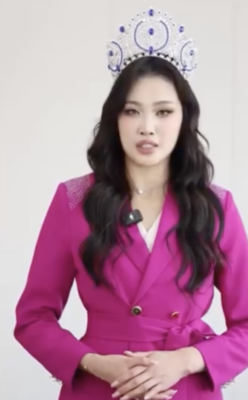
In the aftermath of the pageant, fixation on the crown, not won, following a failure to advance to the Top 60 or even fiftieth percentile has given way to further scrutiny, with additional images to reinforce, the candidate has no idea what the distinction is between Not Safe For Work (NSFW) content or what is acceptable in the workplace.
The episode raises questions about the controversial, lack of self awareness, and the desperate pursuit of attention, and boundaries of public-facing conduct of a civil servant.
From Miss World’s Beauty With a Purpose charity platform to Miss International’s cultural fluency and Miss Universe’s interview stage, the strongest pageant candidates are those whose humanitarian achievements extend beyond the spectacle. This is not a subjective discussion of whether any country’s performance is deemed as strong or weak, as all are winners in their own right, since it is all relative to being better than they were the day before.
With the subject awkwardly standing over the desk, her hands resting propped up and extended to the keyboard when most type whilst standing, it is clear, that she is directing the photographer to deliberately position the photo to show her chest with little natural contour, which looks like a staged portrait, than a straightforward depiction of computer use for work. This is because it is her own personal choice, in opting to use such photography.
The more consequential question is what happens when imagery considered clearly inappropriate for a professional setting is associated with someone holding a public-facing position, particularly where a regulated industry or government institution is involved.
The more meaningful measure is performance: how contestants fare under their competition’s judging criteria, communicate their ideas, represent their countries cultural heritage. In Mongolia, for example, yurts continue to be a means of sustainable lifestyle in some territories, and demonstrate a sustained commitment to the genuine causes they promote.
There exists communes in Ulaanbaatar city dwellers, that choose to migrate to these ger neighbourhoods, in pursuit of a better quality of lifestyle, such as @mongoliannomadicfamily that has articulated their request, of their realities to the United Nations (UN) committee.
The issue is not whether an individual has modelled, participated in a pageant or maintained a personal social-media presence. None of these activities is inherently incompatible with public service, until it crosses the line for inappropriate imagery. Nor should professional scrutiny become a vehicle for judging someone’s body, appearance or private life.
But pageants are not Hollywood, far from it, and their candidates should not be assessed as though their principal responsibility were to become famous, that should begin, or at least have strong roots from their local entertainment circuits’ fame. In Asia, Hong Kong, Taiwan and more, continue to be rooted in producing massive culturally celebrated and known entertainment celebrities, such as Zhang Ziyi, Anita Mui, Maggie Cheung and more.
Image source: Emily Bayarsaikhan’s Facebook Account not managed by the Government (13 October 2026)