


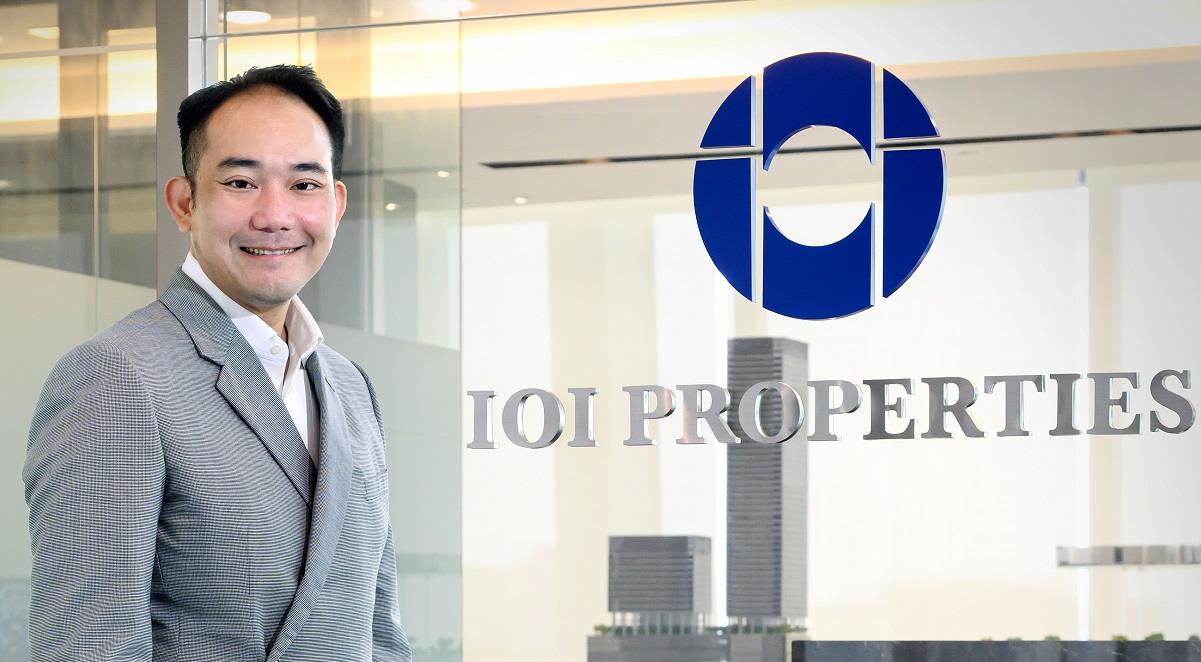
Singapore’s Central Business District is becoming the centrepiece of an ambitious expansion by Malaysia-listed IOI Properties Group, as chief executive Lee Yeow Seng looks to build a larger footprint in the city’s prime commercial real estate market.
From IOI Central Boulevard Towers and South Beach to Asia Square Tower 2, the group has assembled a commercial portfolio in the billions. Its latest move could see it acquire CHIJMES and the The Capitol Kempinski Hotel Singapore, which has been on the market since end 2024 for S$650 million, with discussions and due diligence ongoing.
Underlying the expansion is Lee’s conviction that Singapore’s stability and international standing will continue to attract high-net-worth individuals seeking a safe place to preserve their wealth. He believes this confidence will sustain demand for prime offices, luxury residences and high-end hospitality, particularly amid geopolitical uncertainty.
Luxury hospitality is another pillar of IOI’s strategy. Alongside the W Hotel, that it is currently developing at W Residences Marina View, the group currently owns the JW Marriott at South Beach, which has more than 600 rooms. The redevelopment of Shenton House, scheduled to begin in 2027, is also expected to include around 200 hotel rooms.
Lee believes Singapore remains underserved at the ultra-luxury end of the market, despite its role as a host city for major international gatherings, such as the recently concluded Formula 1. He cited brands such as Bulgari, Aman and Armani as examples of luxury hospitality names present in other global cities but not Singapore yet. With Aman slated to enter in a couple of years, as developed by Perennial Holdings.
Beyond acquiring landmark properties, IOI is also considering how to reposition its existing assets. Plans include introducing more high-end fashion brands at CHIJMES and potentially replacing the Capitol Kempinski with a global ultra-luxury hotel brand. The current owners of Capitol Kempinski, Perennial Holdings, have not made any comment on this potential transaction.
The ambition is to leverage on Singapore’s reputation for stability while serving a clientele whose expectations extend beyond prime real estate to exceptional hospitality and experiences. Yet expansion on this scale brings financial considerations, with IOI working to manage rising debt and attract institutional investors into a proposed private property fund.
Capitalising on its Singapore portfolio, IOI is also preparing a private property fund, targeting a list of undisclosed investors, to unlock capital for further expansion. The vehicle, which Lee expects to establish within two months includes, will be led by former Pimco Prime Real Estate executive Varun Singh.
The fund has approached private equity firms, sovereign wealth funds and insurers.
IOI plans to market holdings of at least S$500 million, with investors subject to a five-to seven-year lock-up, while reducing its stake in the assets to around half.
Over time, more Singapore properties could be injected into the fund, with a potential REIT listing as the longer-term goal.
The strategy offers IOI a route to recycle capital from its landmark assets while bringing institutional investors into its Singapore growth story — an important consideration as the group balances further acquisitions against rising borrowings. For IOI, the opportunity lies in more than owning prime addresses. It is a bet on Singapore’s continued appeal as a place where global capital, business and luxury converge.
Beyond office towers, IOI is exploring a broader repositioning of its assets, including introducing more high-end fashion brands at CHIJMES and potentially replacing the Kempinski with a global ultra-luxury hotel brand. The ambition is clear: move beyond owning landmark buildings to securing a defining position in Singapore’s urban landscape.