


If your name happened to be Janice on 28 June 2026, congratulations: you were suddenly one of the most talked-about people in pop culture.
Across New York, Los Angeles, Toronto, Miami and Houston, Drake hosted a series of tongue-in-cheek “apology parties” exclusively for women named Janice. The concept was simple, bizarre and undeniably Drake: after releasing Janice STFU (or long form for “Janice Shut the F*** Up“) on his latest album Iceman, the rapper decided to throw real-life events as a playful peace offering to anyone who happened to share the name which he dissed, that might have felt personally targeted.
Drake himself never turned up. That didn’t stop the queues.
Videos circulating across social media showed dozens of Janices patiently lining up outside participating venues, many proudly displaying their IDs to prove they qualified for entry. Some came with friends, others admitted they simply wanted to experience one of the year’s strangest celebrity activations. In an era where almost every brand campaign fights for online attention, “Are you actually named Janice?” somehow became the hottest ticket in town.
Inside, guests reportedly received complimentary three-course meals, drinks and some got a shot at winning 5,000 USD in cash. Rather than feeling like an elaborate prank, the events leaned into self-aware humour. Drake wasn’t trying to apologise for anything specific to these women; he was extending the joke beyond streaming platforms and into real life.
It’s the kind of internet-native marketing that only makes sense in 2026.
From Diss Track to Dinner Reservation
Janice STFU quickly became one of the most discussed tracks from Iceman. Internet strangers, fans and the music Industry were divided on the record itself. Some praised its infectious delivery and memorable hook, while others dismissed it as lighter album filler. Regardless of critical opinion, the conversation around the song refused to disappear.
Part of that stems from Drake’s lyrical approach.
The song continues his habit of blurring entertainment, personal feuds and cultural commentary. Among the targets are Kendrick Lamar, whom Drake accuses of performative authenticity and appealing to audiences through what he characterises as “white guilt”. Jay-Z also receives lyrical jabs, proving that Drake remains as comfortable making headlines through his bars as he is through Instagram captions.
The promotional campaign, however, softened the edges. Instead of extending the confrontational tone of the record, Drake transformed “Janice” into an inside joke everyone could participate in. Real Janices became unlikely celebrities for a day, complete with free food and plenty of viral moments.
Drake Knows the Internet Digs a Sensational Story
This isn’t the first time Drake has understood that modern celebrity extends far beyond music.
Over the years, nearly every aspect of his personal life has become internet folklore. His relationships have generated endless headlines, from Rihanna and Serena Williams to SZA, Johanna Leia and Sophie Brussaux, with whom he shares his son, Adonis.
Whether intentionally or not, Drake has mastered turning seemingly random moments into cultural events. Hosting dinners exclusively for people sharing one first name fits perfectly within that playbook. It cost far less than a stadium concert, generated countless TikToks and memes, and gave fans something genuinely unexpected to talk about.
Celebrity marketing increasingly rewards originality over scale. You don’t always need a surprise performance or million-dollar production when a quirky idea can capture the internet’s imagination. A room full of strangers who happen to share the same first name shouldn’t be headline news. In Drake’s world, it somehow is. And for one day, being called Janice was probably the coolest thing on the internet.
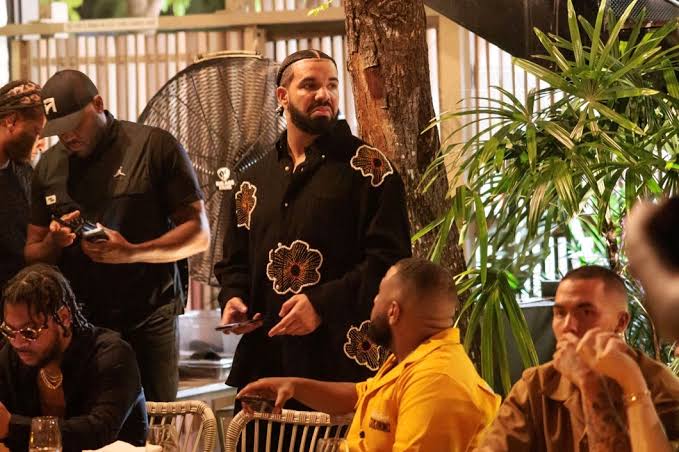
Image Credit: Drake & Gordo at Mon Cheri Mondays at Swan, World Red Eye
(Popspoken Editor’s) If your name is Michelle, please email us Attention Asian Management: hello@popspoken.com, we have a surprise for you.