



Long before hybrid work, wellness rooms, and return-to-office mandates became boardroom talking points, Gavin Woo was learning design from factory floors.
The founder of Office Planner never set out to become one of Singapore’s longest-serving furniture entrepreneurs. When he graduated, he had two job offers on the table: one from a bank and another from a furniture company. He chose furniture almost on a whim. Nearly three decades later, that decision has evolved into a business philosophy centred on a deceptively simple idea: people no longer need an office to work. They need an office worth travelling to.
“Employers have to earn the commute. People don’t come into the office to just work. They come in to connect.”
Mr Gavin Woo (Managing Director, Office Planner)
It is a belief forged through an unconventional career. For his first three years in the industry, Woo was the only English speaker in a Chinese-speaking company. He was dispatched to Australia and Jakarta to discuss deals, while spending countless hours in factories learning how furniture was actually made.
His entry into entrepreneurship was equally unplanned.
In 1997, when his former boss prepared to retire, he figured his customers still needed support. Rather than let the business disappear, Woo started Office Planner. At first, contracts were still invoiced through the old company while his former boss took a percentage. It was hardly the blueprint for a startup. A supplier dispute soon pushed him even further. When a manufacturer attempted to renegotiate pricing midway through a two-year contract, Woo borrowed money and established his own factory instead.
It was a bold move during an uncertain economic period. Looking back, it became one of the defining decisions of his career.
Over the years, Office Planner evolved from a furniture trading company into a manufacturer, then into a solid workspace partner that focuses on human behaviour and wellbeing through furniture design. One milestone came in 2012 when the company obtained the GECA Eco-label certification, making it the only furniture company in Singapore to achieve the standard.
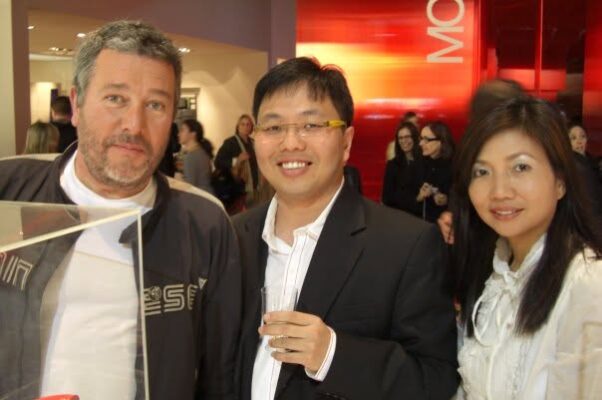
Another turning point came through collaborations with international design heavyweights, Philippe Starck and Karim Rashid, between 2008 to 2010. Working with Starck’s collection introduced Office Planner to international markets including Australia and Korea. Rashid’s collaboration, supported by a six-figure grant, produced the Pinker collection and transformed perceptions of the company from a volume manufacturer into a design-led business.
Ironically, those encounters with global design celebrities reinforced a different lesson. Rather than creating products for an elite audience, Woo became increasingly interested in democratic design: bringing good ergonomics and thoughtful design to everyday people.
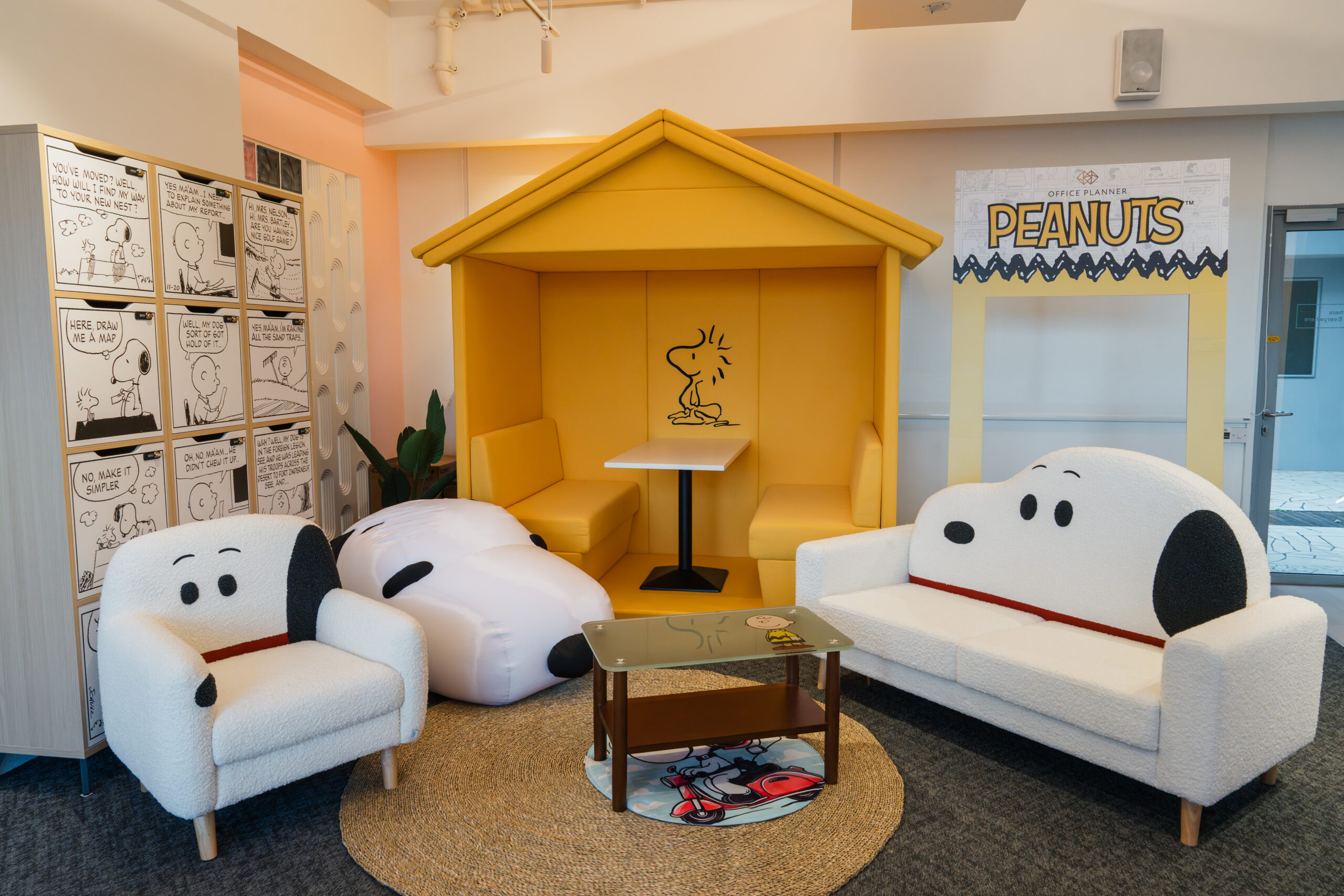
That philosophy underpins his latest project, the Snoopy and Friends Team Furniture Collection, now installed at National Library Board (NLB)’s public libraries, NLB Punggol and NLB Jurong East, till 26 November 2026.
For Woo, the appeal of Peanuts is not nostalgia alone. Characters like Charlie Brown and Snoopy embody values he believes modern workplaces desperately need: resilience, friendship, inclusion, and connection. He figured that too many licensed products simply place a familiar face on an object. Every piece in the collection, he says, was designed around the personalities and relationships within the Peanuts universe.
For Woo, the appeal of Peanuts goes far beyond nostalgia. He believes modern workplaces are suffering from a connection deficit. Employees are more digitally connected than ever, yet many report feeling isolated, disengaged, and detached from their colleagues. In that context, the enduring appeal of Peanuts lies not in the characters themselves, but in what they represent: friendship, resilience, inclusivity, and the simple act of showing up for one another.
Charlie Brown, in particular, has become an unlikely workplace hero for Woo. Despite repeated setbacks, he keeps trying. He keeps turning up. In an era marked by burnout and disengagement, Woo sees that quality as something worth celebrating. The philosophy shaped every piece in the Snoopy & Friends Team Furniture Collection.
Unlike many licensed products that simply place a familiar character onto an existing item, Woo wanted each design to reflect a personality, relationship, or story from the Peanuts universe—so the character lives in the form of the furniture, not just on its surface. The furniture becomes less about branding and more about creating environments that encourage interaction, comfort, and belonging.
The project also carries a personal significance. As a child, Woo remembers wanting toys he could never have, despite growing up in circumstances where they seemed out of reach. Decades later, creating a collection inspired by one of the world’s most beloved comic strips feels unexpectedly emotional. Creating a collection inspired by one of the world’s most beloved comic strips feels, in some ways, like completing an unfinished chapter.
Through initiatives such as his WhereWeWork interview series and the OXO Universe framework, he advocates workplaces designed around work, play and growth rather than productivity alone. His focus is increasingly relevant in an era of disengaged employees and half-empty offices.
Today, he is increasingly focused on wellness, Woo spends much of his time thinking about the future of work.
“The future workplace”, Woo believes, “is not somewhere people are required to be. It is somewhere they genuinely want to be, a place that’s earned the right to have you walk in.”
Image Credit: Snoopy & Friends™ Team Furniture Collection in Singapore by Office Planner, on display at NLB Punggol and Jurong East till 26 November 2026.