



For years, snooker in China carried an image that was far removed from polished sporting prestige. To some families, a pool hall could look like the sort of place you would rather your child avoid — associated with smoke-filled rooms, late nights and questionable company rather than discipline, education or a respectable professional future.
Then came Wu Yize.
Earlier this year, 22-year-old from Lanzhou became the second-youngest World Snooker Champion in history, defeating England’s Shaun Murphy 18–17 in a dramatic final at Sheffield’s Crucible Theatre. Only Stephen Hendry, who was 21 when he won in 1990, was younger. Wu is also only the second player from mainland China to lift snooker’s most prestigious trophy, following Zhao Xintong’s victory in 2025.
The headline number is £500,000 — the winner’s prize money — but the more remarkable figure may be the years of sacrifice that preceded it.
Wu first picked up a cue as a child. His father, Wu Jiepin, recognised his talent early enough to reorganise the family’s life around it. The family even knocked through a bedroom wall to make space for a full-size snooker table at home, and made sacrifices to fund his snooker ambitions.
By his mid-teens, the commitment had become serious. Wu eventually left school at 16 to pursue professional training, with his father accompanying him to move from Lanzhou to Britain, where the reality of chasing a global sporting career was considerably less glamorous than the dream.
The early UK years were difficult. Wu and his father lived in basic accommodation, with Wu initially sleeping in the same bed as his father in a room without windows. His father worked multiple jobs to help cover their living and training expenses, while Wu trained and competed with limited financial security.
There was little room for the romantic version of sporting ambition. It was long hours, uncertainty and the belief that the dedication had to eventually mean something.
It did. Wu turned professional in 2021. He won his first ranking title at the 2025 International Championship, reached the latter stages of the Masters in 2026 and then arrived at the Crucible as one of the sport’s fastest-rising young players.
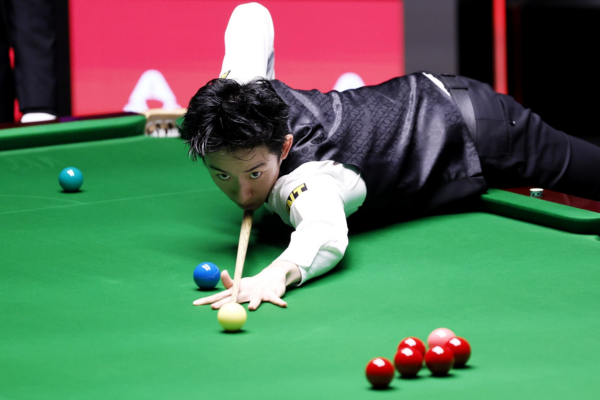
His World Championship victory became the perfect conclusion to the story.
For China, the significance goes beyond one trophy. Snooker is increasingly becoming a serious part of the country’s sporting culture, and Wu represents a new generation for whom the cue is no longer simply a pastime associated with pool halls. It is a pathway to international competition, prestige and, potentially, extraordinary success.
For Wu, however, the win appears to remain deeply personal. After securing the championship, he credited his parents for standing behind him throughout the years of uncertainty and sacrifice.
The world saw a 22-year-old lift a trophy. His family saw the years it took to get him there.