



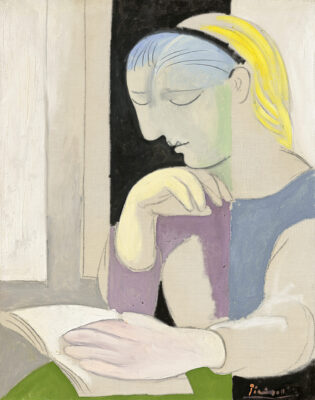
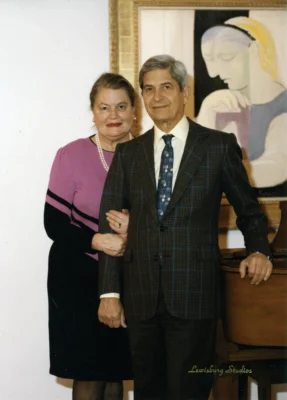
Christie’s will disperse the 80-lot collection of Robert F. Weis and Patricia G. Ross Weis in November, with an estimated value exceeding $180 million. The group includes some blue-chip names, Picasso, Matisse, Mondrian and Rothko, assembled patiently over seventy years. Christie’s describes it as a “deeply personal” collection that also traces the evolution of modernism.
The significance of the sale lies not just in its headline total but in its documented quality. The Weises were known for their rigorous connoisseurship and for acquiring works with clear exhibition, as well as ownership provenance. That diligence gives Christie’s confidence in offering Rothko’s 1958 No. 31 (Yellow Stripe) with an estimate in the USD 50 million range, the kind of figure only achievable when provenance is impeccable. If it meets or surpasses expectations, the Weis Rothko could reset auction benchmarks for post-1950 works by the artist and signal renewed depth at the very top end of his market.
Role of Provenance
The Knoedler Gallery forgery scandal a decade ago, in which a fake Rothko was sold to Sotheby’s chairman Domenico De Sole for USD8.3 million, still reverberates. It showed that even prestigious galleries could mishandle due diligence, with disastrous consequences for collectors and public trust.
Today, provenance and stewardship have become non-negotiable. Without complete ownership histories, museums cannot borrow; insurers cannot underwrite; auction houses cannot sell. For families like the Weises, who view themselves as custodians rather than mere owners, good record-keeping is part of that responsibility.
Impact on the Rothko Market
Rothko’s market has remained relatively steady at the very top end, with only a handful of works available each year. The Fondation Louis Vuitton’s Rothko show, backed by LVMH chairman Bernard Arnault, functions as a global advertisement for the painter’s importance, reinforcing confidence among collectors and institutions. Its lenders include not only national museums but also private figures such as Arnault himself, Taiwanese collector Pierre Chen, and U.S. patrons Adriana and Robert Mnuchin, Elie and Sarah Hirschfeld, and the Nahmad family.
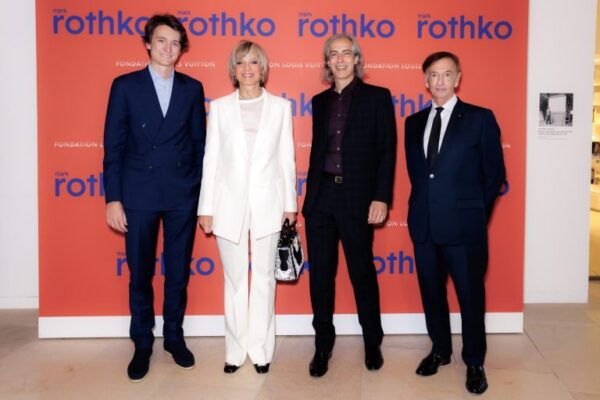
That concentration of ownership underlines how few major Rothkos circulate. When a work with the scale, date and provenance of the Weis painting comes to auction, it can recalibrate expectations.
In this way, the Christie’s sale and the Paris exhibition act in tandem, one stoking demand, the other supplying a rare opportunity, and together they could define the next chapter of the Rothko market.
Image credits: CHRISTIE’S IMAGES LTD. 2025
Stay updated and social with Popspoken: LinkedIn | Instagram