

Clothing has always been a means of communicating social position.
It can signal wealth, occupation, political affiliation, cultural belonging and one’s relationship with the world around them. Its meaning, however, is rarely determined by the garment alone. It is also shaped by who wears it, the circumstances in which it is worn and the institution or social position that person represents.
What makes Prada’s recent 2026 menswear collection particularly interesting is the way it communicates class through clothing. Throughout fashion history, Gucci’s deliberately distressed Screener sneakers, Balenciaga’s notoriously destroyed Paris sneakers and even Vetements’ DHL T-shirt, that integrated a company’s everyday uniform – all demonstrate the industry’s fascination with appropriating visual references associated with ordinary life and elevating them into luxury commodities.

Yet, did Prada go too far this time?
The deliberately stained shirts, aged fabrics and distressed surfaces challenge the traditional visual language of luxury, particularly the associations of classiness, perfection and corporate authority. There had been a consideration, that these garments undermine the very codes through which wealth and status have historically been communicated.
Yet there is also an uncomfortable contradiction in selling the appearance of material fabric deterioration as an exclusive luxury product. Perhaps the issue is less about whether designers should be allowed to experiment with the aesthetics of poverty, and more about the increasingly complicated relationship between fashion, privilege and the people whose lived experiences are being referenced.
This becomes particularly apparent when looking beyond fashion.
Zofia Canlas: Appointed Spokesperson for the poor, while living in luxury
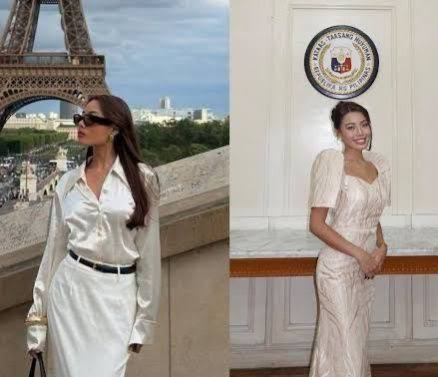
In October 2026, Zofia Canlas was appointed commissioner of the Presidential Commission for the Urban Poor in the Philippines (PCUP), attracting criticism over her lavish travel photographs and questions about her suitability for a position representing economically marginalised communities. Canlas had been involved with the commission since July 2025, having previously served as chief of staff under then-chairperson and CEO Michelle Anne Gonzales. Nevertheless, her appointment attracted widespread criticism, particularly given that she graduated from university in 2024, just two years before assuming a visible, high profile, government position
The criticism was not simply that she travelled or enjoyed expensive or lavish things, compared to the lives of people she claimed to serve, that was benchmarked by UNDP standards. It was the apparent disconnect between the lifestyle being publicly presented, she aspired towards, and the communities she had been appointed to represent.
The commission exists to advocate for some of the country’s most economically vulnerable populations, making questions of representation, experience and public trust particularly relevant.
Particularly, because of her social-media photographs documenting trips to destinations including France, Italy, Greece and the United States, as much as she paid for them, with questions about her professional experience. The government has since defended her credentials, making it about her ability to serve, not about whether she were rich or poor, as emphasised by President Marcos of the Philippines.
“Tingnan po muna natin kapag nakita ninyong nagkamali at saka po tayo pumuna / (Translated: Let us see first and if we see that she makes a mistake, that is when we can criticize),” Palace Press Officer, Claire Castro said in a briefing on October 20.
Constanza Peña: Intention behind a T-shirt saying “Tax the Poor”
A photograph of Columbia University student, Peña, daughter of the Paraguayan President, wearing a T-shirt printed with “T.T.P. Tax The Poor” circulated online, attracting criticism amid economic turmoil and the Ueno Bank crisis back in Paraguay. Her associates reportedly suggested the photograph was old, and its intended meaning remains unconfirmed.
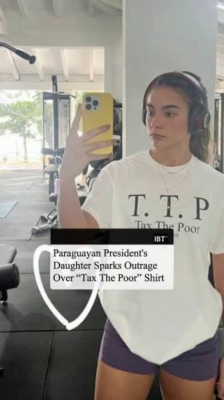
This example is particularly useful because the message on the garment is explicit.
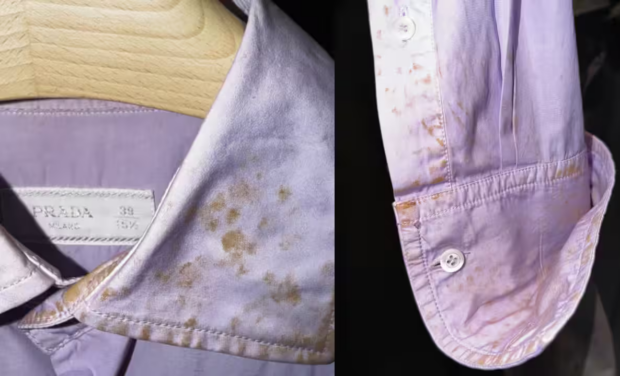
Unlike Prada’s stained shirts, which require interpretation and an understanding of the designers’ conceptual intentions, “Tax the Poor” communicates a provocative relationship with economic hierarchy directly. The significance of the controversy is not simply that someone wore an offensive slogan.
It is that the slogan was associated with a member of a politically prominent family at a time when the masses were experiencing financial uncertainty.
Bringing it back to Prada: who gets to wear hardship?
There is a distinction between wearing something that looks poor and actually occupying a position of economic vulnerability. There is also a distinction between being wealthy and being insensitive to poverty.
Neither Canlas nor Peña needs to dress modestly to prove solidarity with poorer communities. Nor should personal wealth automatically disqualify someone from public service. But clothing, like any other form of public communication, carries meaning that extends beyond the wearer’s intentions. It is known that some of the wealthiest moguls wear, classy, understated clothing, as they have nothing much more to prove.
For example, a black leather jacket. A turtle neck, or simply the same well-made Uniqlo t-shirt on repeat.
Prada’s stained shirts therefore raise a question that extends beyond the runway: when does the aesthetic appropriation of hardship become a form of class insensitivity? And can luxury fashion meaningfully challenge the visual language of wealth while continuing to profit from the very economic structures that make luxury exclusive in the first place? Only time will tell.
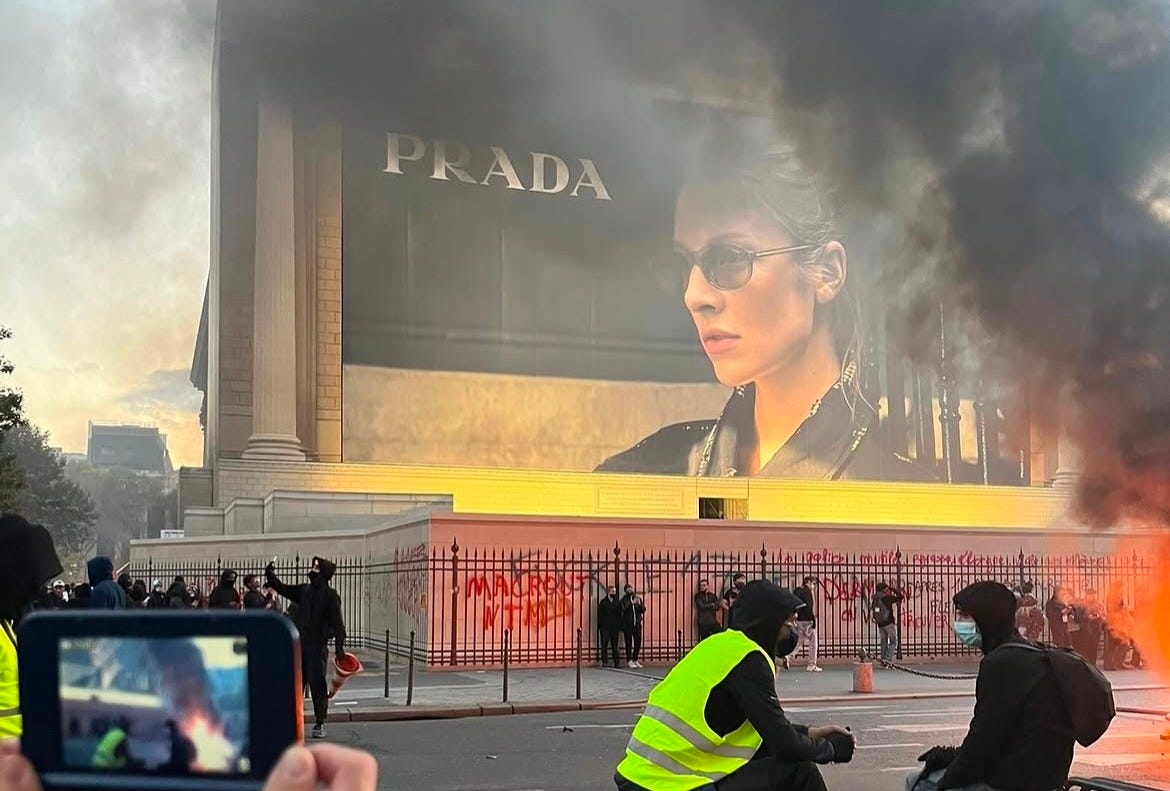
Featured Image: Instagram @Hinted, La Madeleine church in Paris during protests against rising living costs (Photograph taken on October 17)