


A woman in China has reportedly been left with a dramatically more pronounced jaw after seeking treatment for what was initially described as a relatively minor dental and facial improvement sought for. A makeup trend can be removed at the end of the day. A filter disappears when the screen is turned off, same for photoshop or digital alterations, that may majorly mislead the public to viewing what it may be someone looking wildly different from their modelling card. Surgery is different. It changes a person’s physical structure, sometimes permanently.
The reported dispute is therefore about more than whether a prominent jaw is attractive. It is about whether a surgeon’s personal interpretation of beauty should ever influence the outcome of a procedure when the patient sought something else. Further, it sheds light as to the lengths, beauty is sought for, and at what cost.
Identified only as Xiaoyu in XiaoHongShu, a widely used social media platform in China, and local Chinese media, the 24 year old reportedly sought treatment for a slightly protruding lower jaw, particularly noticeable from her side profile.
She was reportedly referred for orthognathic surgery at Wuhan University Stomatological Hospital. Pre-operative assessments reportedly indicated a mandibular protrusion of approximately 2mm. According to local media reports, the intended correction involved moving the lower jaw backwards by around that amount.
Instead, the woman alleges that surgeons moved her jaw in the opposite direction by more than 13mm.
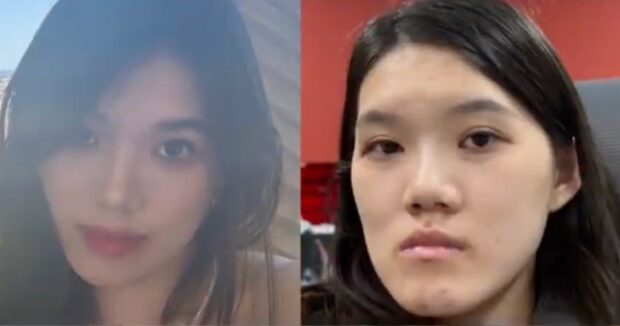
The result, according to reports, was a significantly more prominent lower jaw and an appearance that some observers in United Kingdom, have compared to an ancient Chinese emperor. More importantly, she reportedly experienced consequences extending beyond appearance, including a worsening bite, gum recession and dental complications. She has also alleged that changes following the operation left her able to breathe through only one nostril.
The reported exchange with her surgeon has become perhaps the most unsettling part of the story. When she questioned the result earlier this year, her doctor allegedly tried to placate her, as translated with words to the effect: You know I like your face now. Embrace the Western look.
The case remains a documented dispute, and the allegations should not be treated as a final finding of medical liability, since the procedure was conducted smooth, without any known harmful physical side-effects post-operation, and currently with no finding of medical negligence at present moment. But it raises an uncomfortable question about something much larger than one operation: who decides what a beautiful face should look like, and what is considered a popular face?
In contemporary Asian beauty culture, the so-called “baby face” remains a powerful ideal, as observed by digital creators, and agreed for by the Internet, though the sheer number of shares, likes and organic views, by some genuinely popular accounts or creators.
Generally, it appears that soft contours, a smaller-looking lower face, youthful proportions and a less prominent jaw are often associated with youth and delicacy. The aesthetic sits at almost the opposite end of the spectrum from a sharply defined or prominent jaw.
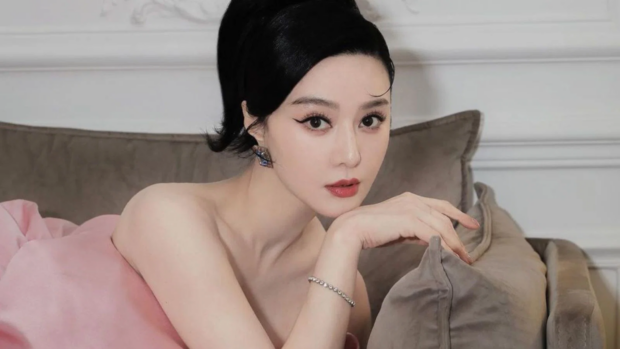
At the same time, global beauty standards have become increasingly fluid. Western-influenced aesthetics — stronger facial definition, sharper contours and more pronounced features — have entered the vocabulary of beauty across Asia alongside distinctly East Asian ideals.
There is nothing inherently wrong with either aesthetic. Beauty is subjective, and people should be free to decide what they want their own faces to look like. But that freedom becomes complicated when the person making the decision is not the person living with the result.
The saddest part is that a procedure intended to improve one aspect of her health and appearance has reportedly left her facing further impact on her self-confidential, with some allegedly dental discomfort, as compared to her 2mm additional extrusion. Essentially, an even more generous overbite.
Beauty standards will continue to change. Asian “baby faces” may give way to lean, and sharper jawlines, and angular Western aesthetics may be deemed more or less influential, to some viewers on the internet, or perhaps to those on XiaoHongShu, known to be majorly broadcasted for a Chinese audience. But a person’s face is not a trend cycle. And when something goes ‘wrong’, even if it were a subjective opinion, it would be the patient, not the beauty standard, who has to live with it.
Image credit: Xiaoyu’s Social Media (Before the Surgery)